


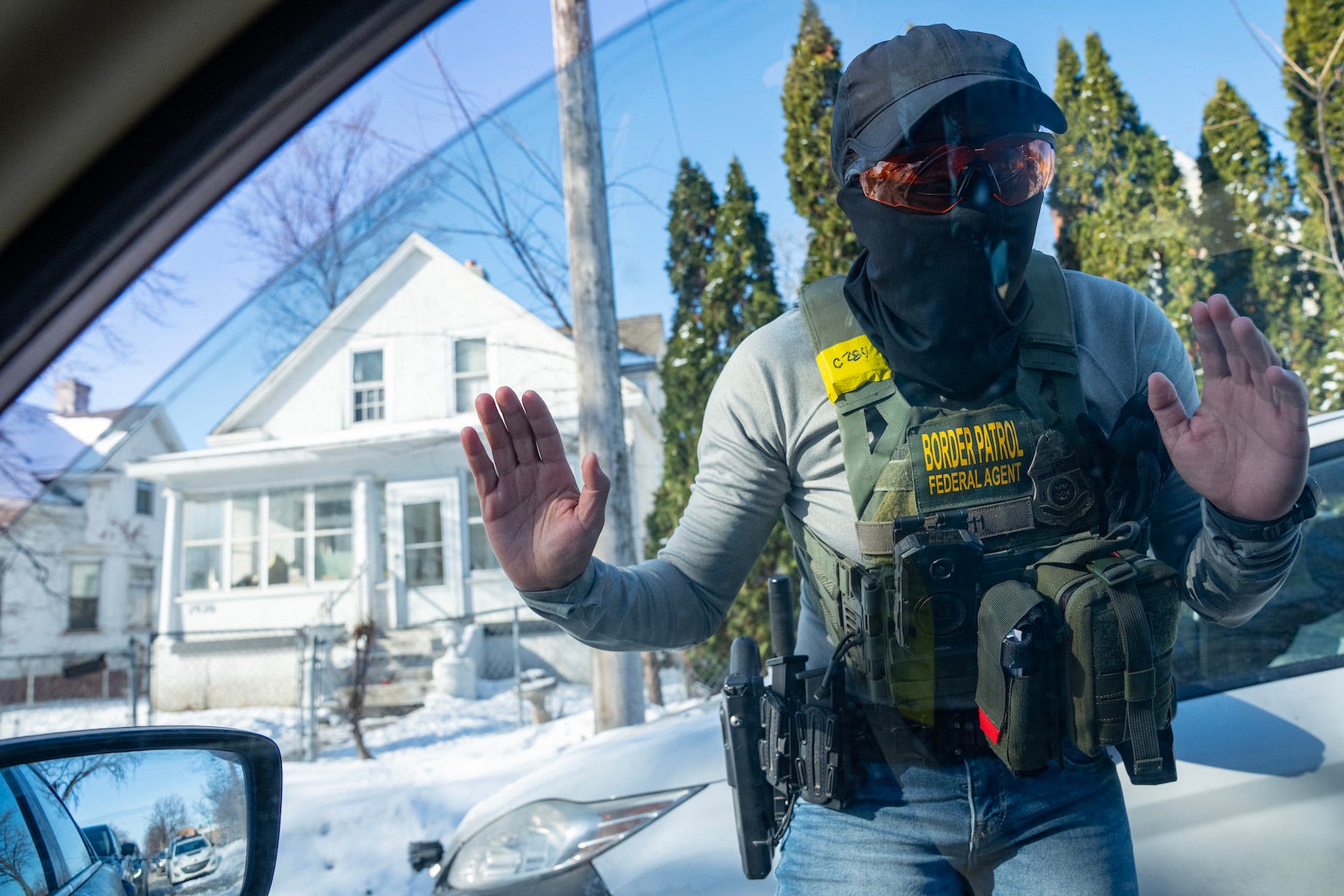
Over the past six months, Donald Trump’s government has tried — and mostly failed — to adopt a radical reinterpretation of a nearly three-decade-old law that would allow authorities to detain millions of suspected noncitizens without the opportunity to post bond.
As of early January, more than 300 federal judges reportedly rejected that scheme in more than 1,600 cases across the country, according to a must-read breakdown by POLITICO’s legal reporter Kyle Cheney.
Then, on Friday evening, a divided three-judge panel of the most conservative federal appellate court in the United States granted Trump’s wish.
The dissenting judge unpacked the profound implications of that decision.
“In sum, the government’s proposed reading of the statute would mean that, for purposes of immigration detention, the border is now everywhere,” U.S. Circuit Judge Dana Douglas, a Joe Biden appointee, wrote.
‘Notable exceptions’
No presidential administration, including during Trump’s first term, adopted such a sweeping interpretation of the Illegal Immigration Reform and Immigrant Responsibility Act of 1996.
“The Congress that passed IIRIRA would be surprised to learn it had also required the detention without bond of two million people,” Douglas wrote in her dissent. “For almost thirty years there was no sign anyone thought it had done so, and nothing in the congressional record or the history of the statute’s enforcement suggests that it did.”
U.S. Circuit Judges Edith Jones and Kyle Duncan, sitting on the farthest right flank of the nation’s most conservative court, openly acknowledge that their ruling is an outlier.
“From 1997 to 2025, successive presidential administrations and many immigration judges treated unadmitted aliens as being subject to § 1226(a) rather than § 1225(b)(2),” the majority opinion states, referring to the portion of the statute that allows for a bond hearing rather than the one that does not.
The executive branch’s Board of Immigration Appeals issued a decision changing this practice in July 2025, sparking more than 1,000 habeas corpus cases where petitioners said they were deprived of bond hearings.
“In most of these cases, the district court found in favor of the petitioner,” the majority opinion states, citing a recent tally of 350 decisions that went against the government.
Jones and Duncan join the ranks of what they call the “notable exceptions” of statutory interpretation.
‘Intolerable in the interior’
To accomplish this, Jones and Duncan effectively erase the distinction between the rights of immigrants crossing over the border and those who have long lived in the United States with their spouses, children, and grandchildren.
They write in their ruling: “It seems strange to suggest that Congress would have preserved bond hearings exclusively for unlawful entrants.”
In the dissent, Douglas explains why this view is dangerous for the rights and liberties of everyone in the United States.
“[G]overnment intrusions have always been tolerated at the border that would be intolerable in the interior, for the obvious reason that citizens and noncitizens alike expect to be able to go about their business without having to show that they are ‘clearly and beyond doubt entitled to be admitted’ if taken, or mistaken, for an otherwise inadmissible noncitizen,” the dissent states.
Under the Fifth Circuit’s reading, the dissent notes that “anyone present in this country at any time must carry the precise kinds of identification they would otherwise have only carried to the border for international travel” or risk mandatory detention.
“The majority seems to be unable to imagine what it might mean to be detained within the United States without the appropriate proof of admissibility, and, without a bond hearing, to require the services of a federal habeas corpus lawyer to show that one is entitled to release and deserves to see the outside of a detention center again,” the dissent states. “This is not, or not just, a matter of human sympathy, but rather a matter of understanding one of the core distinctions in immigration law, and the very good reasons for it.”
The dissent’s focus on the blurring between the border and the interior falls during the federal surge inside Minnesota’s Twin Cities, including large numbers of Border Patrol agents operating far away from the Canadian border. (The American Immigration Council explains the diminishing significance of Border Patrol’s so-called 100-mile zone under Trump 2.0 in this helpful primer.)
The Fifth Circuit’s ruling is widely expected to be bound for further appeal, culminating in an inevitable Supreme Court fight. The dissent spells out the stakes of this battle for any citizen or noncitizen to count on a right against detention without bond: Where is the United States border?
The answer carries profound implications for freedom and due process in the 250th year of the U.S. democratic experiment.
Read the Fifth Circuit’s ruling here.
Scheduling note
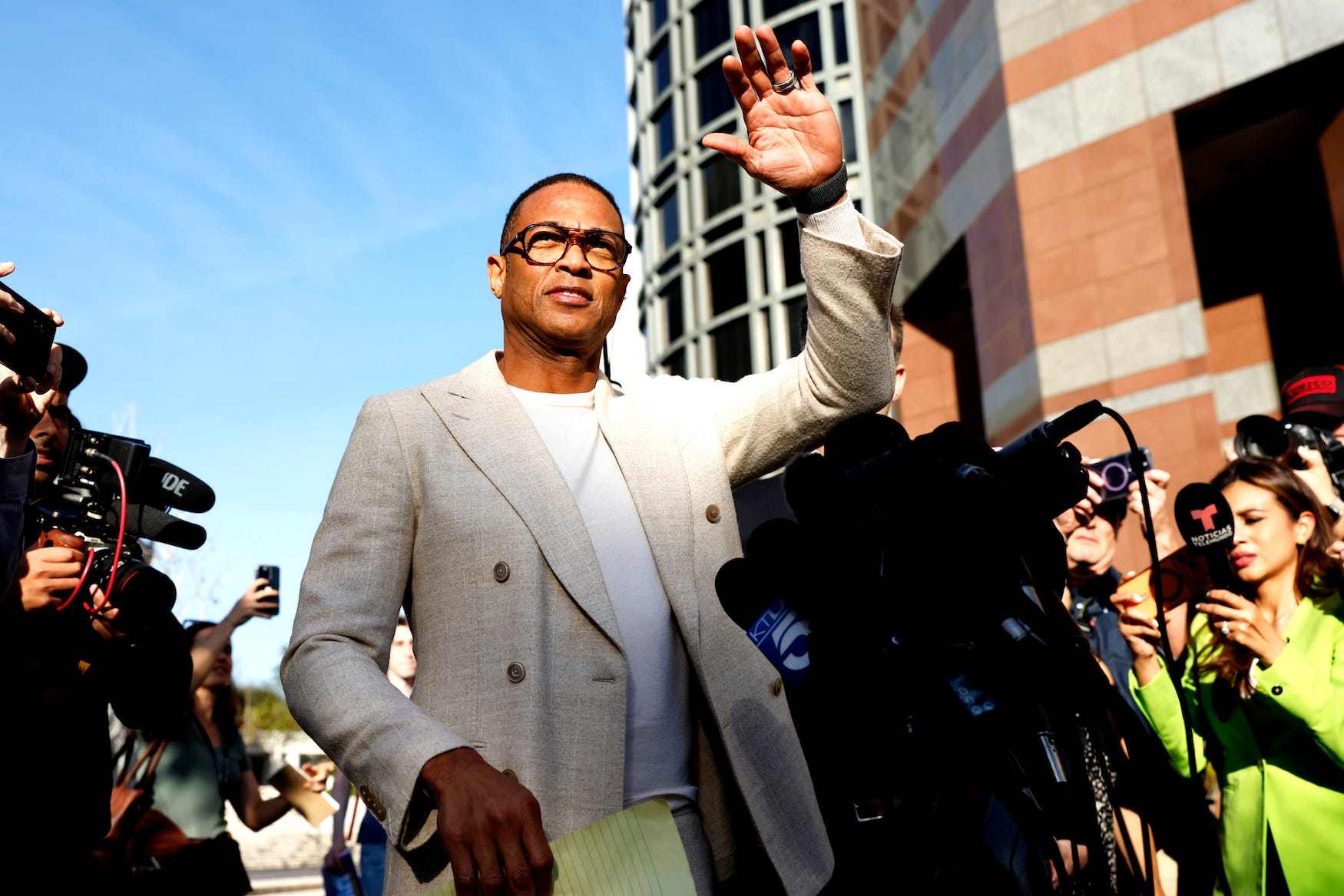
One of the most important reckonings for press freedom during Trump’s second term will kick off on Friday with the arraignments of Don Lemon and Georgia Fort inside a federal court in St. Paul, Minn.
But they will be only two of five defendants in the Cities Church protest case scheduled for an initial hearing.
The lead defendant, civil rights attorney Nekima Levy Armstrong, is also scheduled for arraignment, and she has a pending motion to lift all pretrial restrictions in light of the White House’s use of an “altered” image of her "to make it falsely appear that she was crying and making her face darker."
It’s a nine-defendant indictment, and the details matter.
All Rise News free or paid subscribers receive in-depth coverage of the cases that shape our democracy. If you are in a position to financially support that work, or have done so already, you can unlock regular features like the listings below. “Rising This Week” previews signficant court proceedings and opportunities for civic engagement.
