


Below this story, look out for the legal rundown “Tonight in Your Rights.”
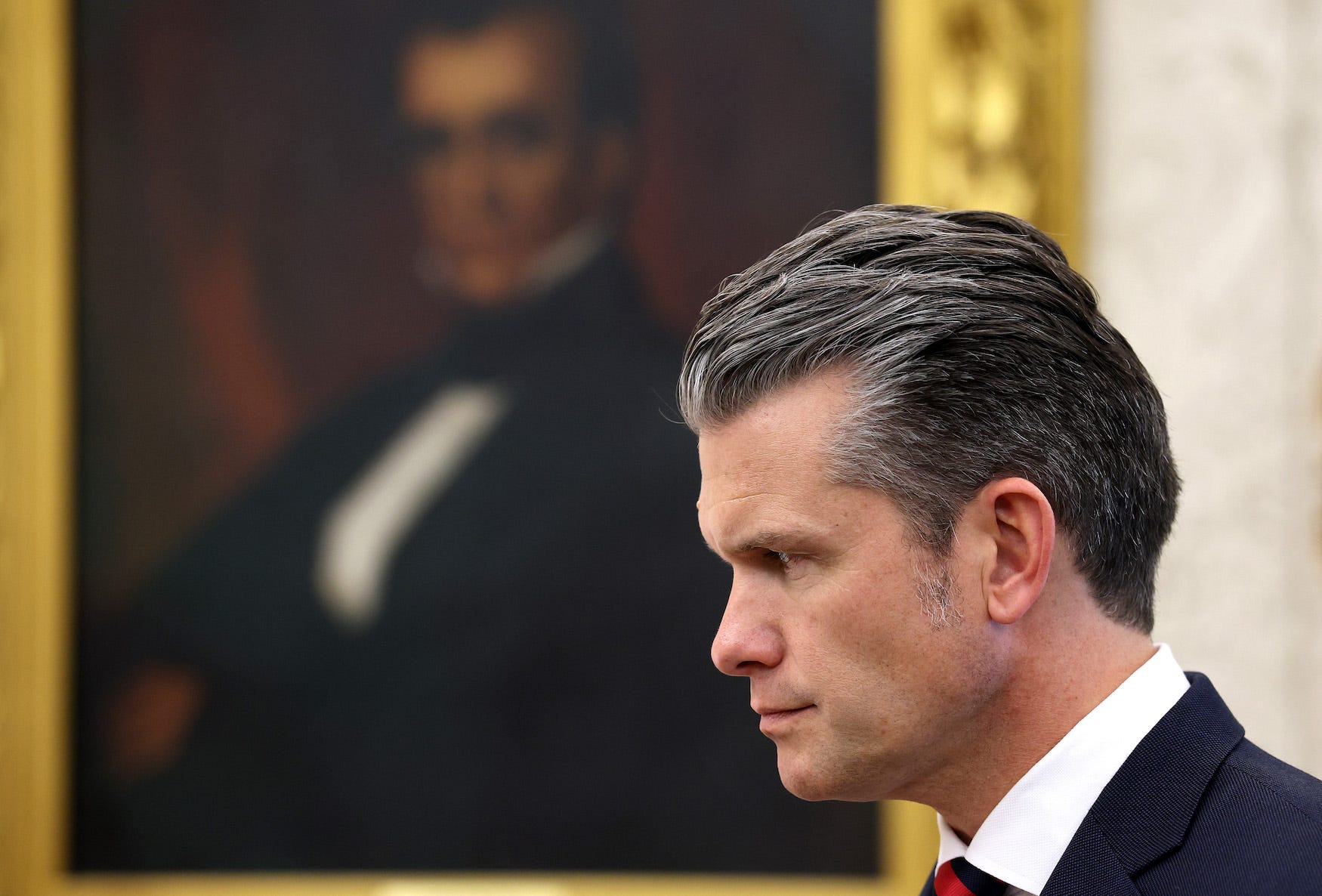
Defense Secretary Pete Hegseth’s tight controls on the media that led to the exiling of most mainstream news reporters from the Pentagon violated reporters’ constitutional rights, leaving the public in the dark during a time of war, a federal judge ruled on Friday.
Senior U.S. District Judge Paul L. Friedman, a Bill Clinton appointee, slammed Hegseth’s “overzealous actions” in a 40-page opinion.
“A primary purpose of the First Amendment is to enable the press to publish what it will and the public to read what it chooses, free of any official proscription,” Friedman wrote in the ruling’s first paragraph. “Those who drafted the First Amendment believed that the nation’s security requires a free press and an informed people and that such security is endangered by governmental suppression of political speech. That principle has preserved the nation’s security for almost 250 years. It must not be abandoned now.”
Last year, the Defense Department announced that media credentials could be revoked “based on the unauthorized access, attempted unauthorized access, or unauthorized disclosure of” information.
Nearly every major news organization immediately protested the policy. Most refused to sign the agreement, were exiled from the Pentagon and replaced by a coterie of fringe outlets and pro-Trump influencers.
In December, The New York Times and its national security reporter Julian Barnes sued in federal court in Washington, D.C., calling the policy unconstitutionally vague. Judge Friedman agreed.
“The considerations that may or may not lead to a reporter being deemed ‘a security or safety risk’ include obtaining or attempting to obtain any information that the Department has not approved for release, regardless of whether that information is classified,” the ruling states. “But to state the obvious, obtaining and attempting to obtain information is what journalists do. A primary way in which journalists obtain information is by asking questions. “
The Freedom of the Press Foundation’s chief of advocacy Seth Stern praised the ruling for calling out “the Pentagon’s outrageous censorship,” even if it “wasn’t exactly a close call.”
“If the same issue was presented as a hypothetical question on a first-year law school exam, the professor would be criticized for making the test too easy,” Stern said in a statement. “It’s shocking that this sweeping prior restraint was the official policy of our federal government and that Department of Justice lawyers had the nerve to argue that journalists asking questions of the government is criminal.”
Judge Friedman forcefully rejected the Trump Justice Department’s argument that the Pentagon was trying to enforce criminal solicitation statutes, noting that journalists’ jobs call for soliciting information.
“A charity requesting donations, a community organizer calling on volunteers, or a journalist asking questions is not a crime!” he exclaimed.
The judge found that the actual aim was to “weed out disfavored journalists.”
“The Court recognizes that national security must be protected, the security of our troops must be protected, and war plans must be protected,” Friedman wrote.
”But especially in light of the country’s recent incursion into Venezuela and its ongoing war with Iran, it is more important than ever that the public have access to information from a variety of perspectives about what its government is doing — so that the public can support government policies, if it wants to support them; protest, if it wants to protest; and decide based on full, complete, and open information who they are going to vote for in the next election. As Justice Brandeis correctly observed, ‘sunlight is the most powerful of all disinfectants.’”
Judge Friedman found that the revocation of press credentials also violated reporters’ Fifth Amendment right to due process. The judge voided the challenged provisions of the Pentagon’s policies and rejected the government’s request to pause his ruling for seven days.
Read Judge Friedman’s opinion in full here.
Below the paywall:
Don Lemon’s lawyers roast Trump DOJ’s ‘charge first, investigate later’ m.o.
Nexstar-Tegna update: AGs demand quick action after deal closes
Two New York Times scoops you shouldn’t miss.
