


Dogged by corruption scandals, a right-wing leader faces an unexpectedly stiff electoral challenge, and defeat can leave him particularly vulnerable to criminal prosecution.
To cling to power, the head of state accelerates his attacks on democratic institutions.
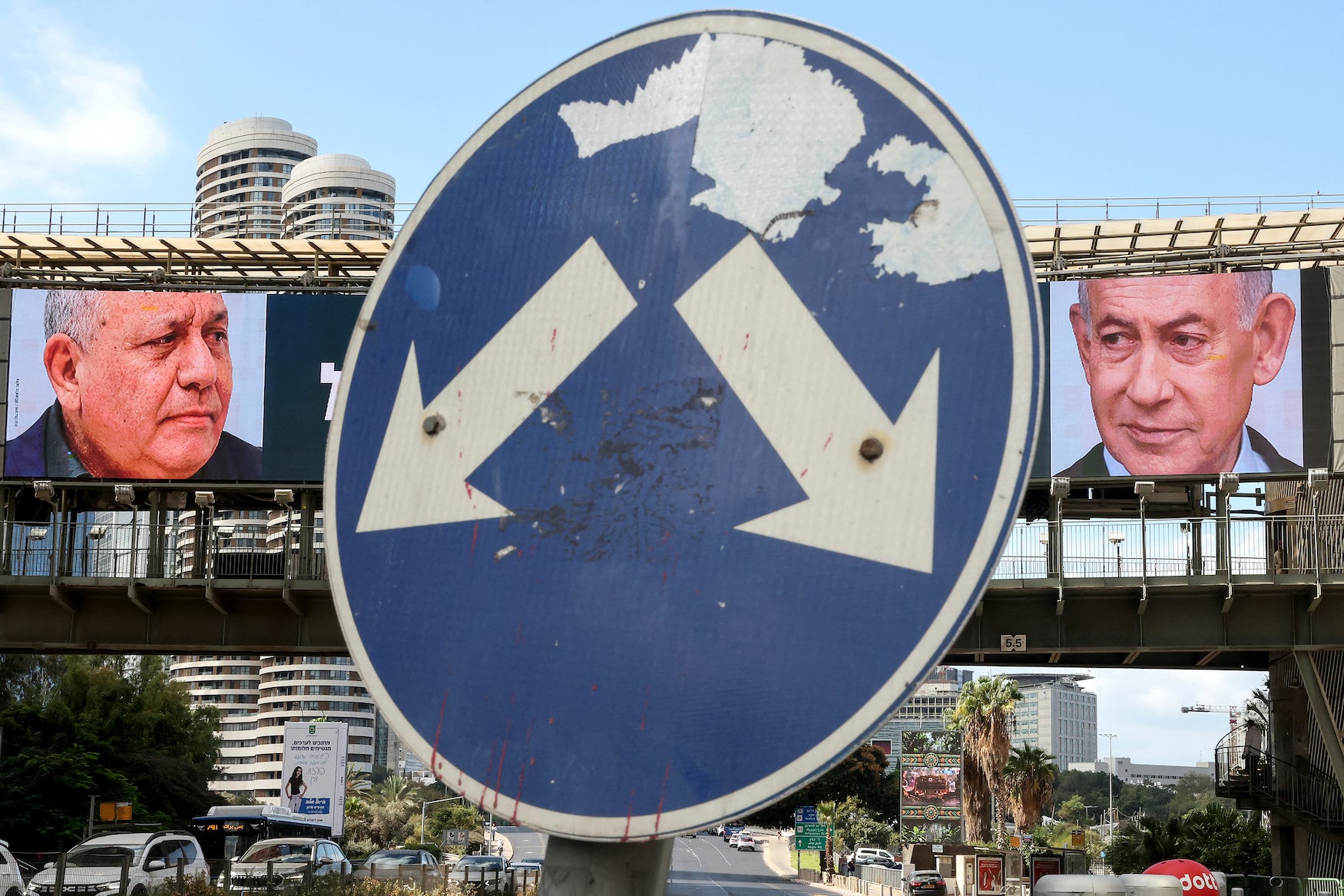
Does this narrative describe the final days of Donald Trump’s first term in the United States, the failed coup d’etat of Jair Bolsonaro in Brazil, the last days of Hungarian strongman Viktor Orbán’s decade-long tenure, or the state of play as Israelis head to the polls in historic numbers for the first reckoning for Benjamin Netanyahu since the catastrophic security failures of Oct. 7, 2023?
For pro-democracy observers, the pattern fits all of those global right leaders and more — and Trump’s endorsement doesn’t go so far in propping up the global right as it once did.
‘Nowhere to go’
Last week, Trump announced his endorsement of Netanyahu, and all of the usual indicators of measuring its impact yawned. The gambling markets barely budged, and the polls kept inching in the direction of opposition leader Gadi Eisenkot, who heads the center-right Yashar party hoping to unseat him. For many, Trump’s endorsement evoked a déjà vu experience for those who recalled the White House stumping earlier in the year for Orbán, who lost in a landslide. By press time, exit polls showed opposition parties ahead with no clear winner and a strong performance by Arab-majority parties in Israel.
Prominent journalist Noga Tarnopolsky, one of the most seasoned correspondents covering Israeli and Palestinian politics, saw signs of desperation from Netanyahu’s camp.
“We're getting serious indications that he has made every effort to reignite the war with Iran and that Donald Trump is the one stopping him,” she said in a video interview. “Similarly, in the West Bank, it appears that the government really and truly is trying to ignite some kind of conflagration.”
Despite several headlines warning of that risk, Israel made it to election day without one of those catastrophic scenarios.
Like the former leaders in Brazil, Hungary, and the United States, Netanyahu could be facing a legal tsunami if he’s unseated, including an ongoing corruption trial, an investigation into his administration’s ties to the Qatari government, and an arrest warrant from the International Criminal Court that could complicate any plans for safe harbor from his domestic problems.
“He has nowhere to go because Netanyahu is indicted as a war criminal in every country that is part of the International Criminal Court,” Tarnopolsky noted.
Other right-wing leaders have contingency plans ready in the event of criminal prosecution: Flávio Bolsonaro, the eldest son of his putschist father, escaped the shadow of a potential money laundering investigation in Brazil by fleeing to the United States on Tuesday, one day after he conceded the election to President Luiz Inácio Lula da Silva. Hungarian Prime Minister Péter Magyar, who unseated Orbán earlier this year, accused his predecessor of treason on the campaign trail and raised the possibility of prosecuting him for other alleged offenses.
Talk about golden parachutes: Trump reportedly raised the prospect of backing Orbán for U.N. Secretary-General.
Elsewhere around the world, authoritarian minded rulers are being shown the door: Serbian voters unseated Putin-backed strongman Aleksandar Vucic on the same day as Flavio Bolsonaro’s defeat in Brazil.
‘The power to change history’
Pro-democracy organizations in the United States are drawing the connections between overcoming autocracy abroad and at home.
“Next week’s midterm elections will be a defining test of our democracy,” Democracy Defenders Action’s Susan Corke wrote in a statement. “After two years of democratic backsliding, repeated assaults on the rule of law, and congressional leaders too often unwilling to check presidential power, many Americans are asking whether the damage can be undone and whether people have the power to change history. This weekend, voters in Serbia and Brazil gave their answer: it can and we can.”
If Israelis elect a new prime minister, change will likely be slow. Eisenkot, the main opposition leader, leads a centrist coalition and has declared his opposition to a Palestinian state, but he also has denounced settler “terrorism” in the West Bank, alleging that it is effectively state-sponsored. Eisenkot has promised to clamp down on settler violence and establish an independent commission into the security lapses of Oct. 7th.
Many Israelis are also hoping that an Eisenkot government will repair damage to democratic institutions wrought by Netanyahu-backed laws weakening the country’s judiciary, which Tarnapolsky described as a “putsch.”
“I think any government that comes into being will initially focus on those very, very internal matters and only later be able to address [...] diplomatic matters or matters beyond the border,” Tarnapolsky said. “This is all on the assumption that there’s no further attacks on Israel. If Israel is attacked again in an interim period or in the first few months of a new government, that could completely shift this equation and that’s not impossible.”
She predicts any change will require longer than a political cycle of work.
“If Israelis vote to oust this government — and in fact vote to give themselves a chance to recreate the state of Israel — I think we're talking about the work of a full generation,” she told All Rise News. “I don't think we're talking about six months or even one term in government.”
Watch the full conversation about Israel’s elections, democratic rebounding and the diminishing returns of a Trump endorsement in the video below.
Excellent observations. Thanks for keeping us in the loop, Adam.
Susan Corke nailed it.