


Independent media, beholden to no one, never has been more important.
All Rise News reports and presents the news with an eye on your power.
Nexstar’s proposed $6.2 billion merger with Tegna faces an antitrust lawsuit by eight Democratic state attorneys general seeking to block the creation of a “broadcast behemoth.”
California Attorney General Rob Bonta filed the lawsuit together with seven other states in federal court in Sacramento.
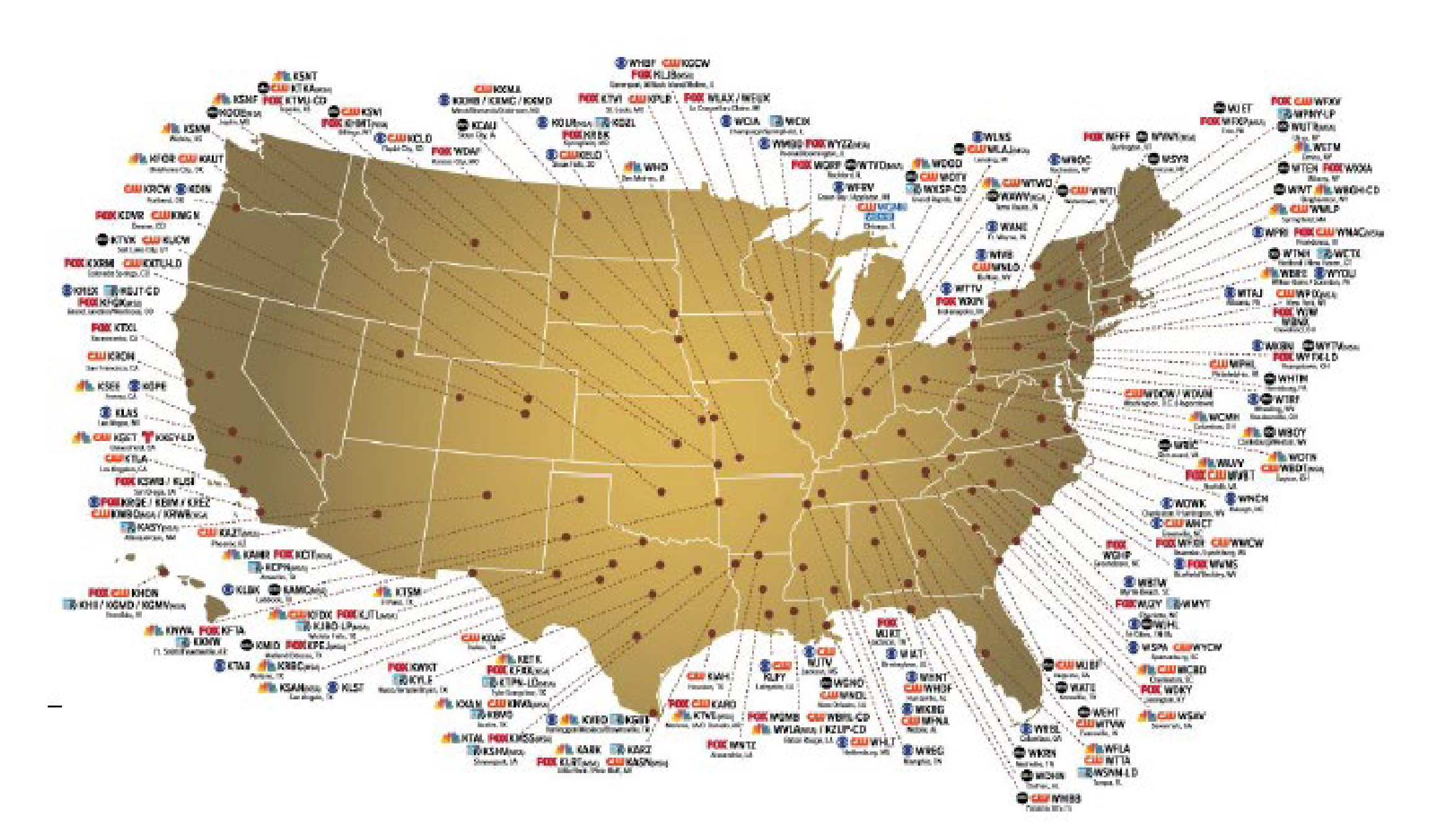
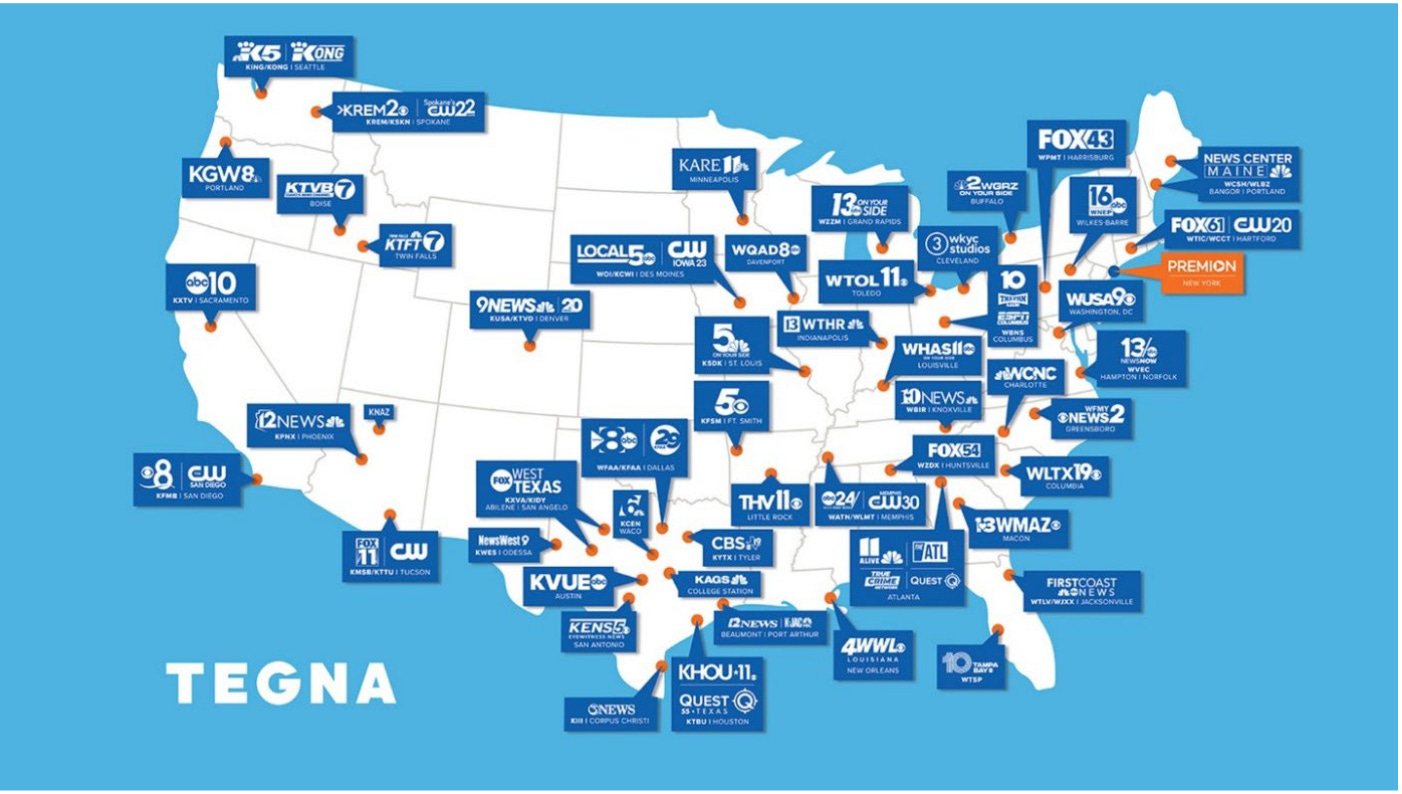
Donald Trump vocally supported the proposed deal last month, writing on his social media platform that it would “help knock out the Fake News because there would be more competition.” In fact, the proposed merger would put 265 television stations across 44 states under a single corporate monolith, even as member stations carry “Big Four” brand names like CBS, ABC, NBC and Fox.
Collectively, the entity would reach roughly 80 percent of U.S. households, creating media concentration even in Republican-led states like Texas.
Possible action item: Calling state AGs
Consumer and digital rights groups often host “Call your AG” campaigns in favor of certain regulatory actions. In 2024, more than 40 attorneys general pushed Meta to take action due to a “dramatic and persistent spike in complaints” about account takedowns and lockouts.
Find a directory of state AGs here.
‘Protecting consumers is bipartisan’
No Republican state attorney general has yet signed on to the lawsuit, but Bonta hasn’t written off the prospect of future bipartisan buy-in.
“We are right now on trial in the Southern District of New York on the Ticketmaster-Live Nation case side by side with multiple red states,” Bonta said in a press conference. “So the idea that antitrust and protecting consumers is bipartisan is on full display.”
Any Republican state attorney general would have to break with Trump and his Federal Communications Commission attack dog Brendan Carr, who also publicly supports the deal.
The states currently involved in the lawsuit are California, Colorado, Connecticut, Illinois, New York, North Carolina, Oregon and Virginia, and they warn that the proposed deal would mean less diversity and higher prices for their citizens.
“Competition among local TV stations allows consumers to enjoy a variety of affordable options for quality coverage of news, sports, and more,” New York Attorney General Letitia James wrote in a statement. “This illegal merger threatens local news and could raise fees for consumers by combining hundreds of TV stations under the same owner.”
Last autumn, Nexstar suspended Jimmy Kimmel Live! on their ABC member stations, a decision made after Carr threatened to take regulatory action against networks that ran it. Many observers strongly suspected that Nexstar made the decision with an eye on completing its proposed merger with Tegna.
Prominent political scientist Norm Ornstein called it unusual for state attorneys general to push for antitrust action without their federal counterparts — or have to do so.
“Normally in the past, […] whether it's media consolidation or any other issues that involve antitrust violations or basically efforts to curb undue consolidation, we've relied on the federal government,” Ornstein told All Rise News in a video interview. “We either rely on the FCC as a watchdog when it comes to news outlets or communications outlets from radio and television, broadcast radio and television, or we'll rely on the antitrust division in the Justice Department or the Federal Trade Commission to police these things.”
Now, it’s “exactly the opposite,” Ornstein added.
“We have an FCC that wants to intimidate anything that smacks of criticism of Donald Trump or his administration, an FCC chair who, as we know, threatened to take away the licenses from stations that reported negative things about this war with Iran that Trump didn't like,” he added.
‘News duplication’
Polls consistently rank local news outlets among the most trusted, but those perceptions are changing amid increasing consolidation.
Last October, Pew found that trust for local news outlets remained high, but it was declining, especially among younger Democratic votes. The lawsuit notes that consolidation also makes the outlets less in touch with their communities.
“Based on Nexstar’s pattern of newsroom closures and its recent statements to investors, the merged entity is likely to consolidate newsrooms of previously separate Big 4 stations, degrading the content and quality of local news broadcasts through the Big 4 stations,” the complaint notes. “A recent study found that Nexstar is the worst offender in ‘news duplication’ in local news, meaning Nexstar stations air local news content that is identical across multiple stations in one location.”
In 2018, a viral video of a “must-run” by the right-wing conglomerate Sinclair drew massive public attention to local TV stations blaring the preferred framing of their corporate owners.
The clip, compiled by Deadspin, showed anchors across the country reciting an identical clip denouncing “fake news.”
The August 2025 University of Delaware study “Reusing the News” showed that Nexstar is now “the most active controller of duplicating station pairs, far outpacing Sinclair.
Ornstein, a political scientist, said that “AGs should be on notice about the importance of this,” encouraging public call-in campaigns.
“If there’s going to be an attempt to curb too much consolidation, too much danger of ideologies ruling communication sources that we have, it’s not going to come from the federal government,” Ornstein said. “It’s going to come from states and it’s going to come from active and responsible attorneys general in those states.”
Look out for my full video interview with Norm Ornstein later this week on All Rise News and Legal AF.
Read the lawsuit in full here.
Boycott TV until they break up the monopolies.
Thanks Adam, so informative!