


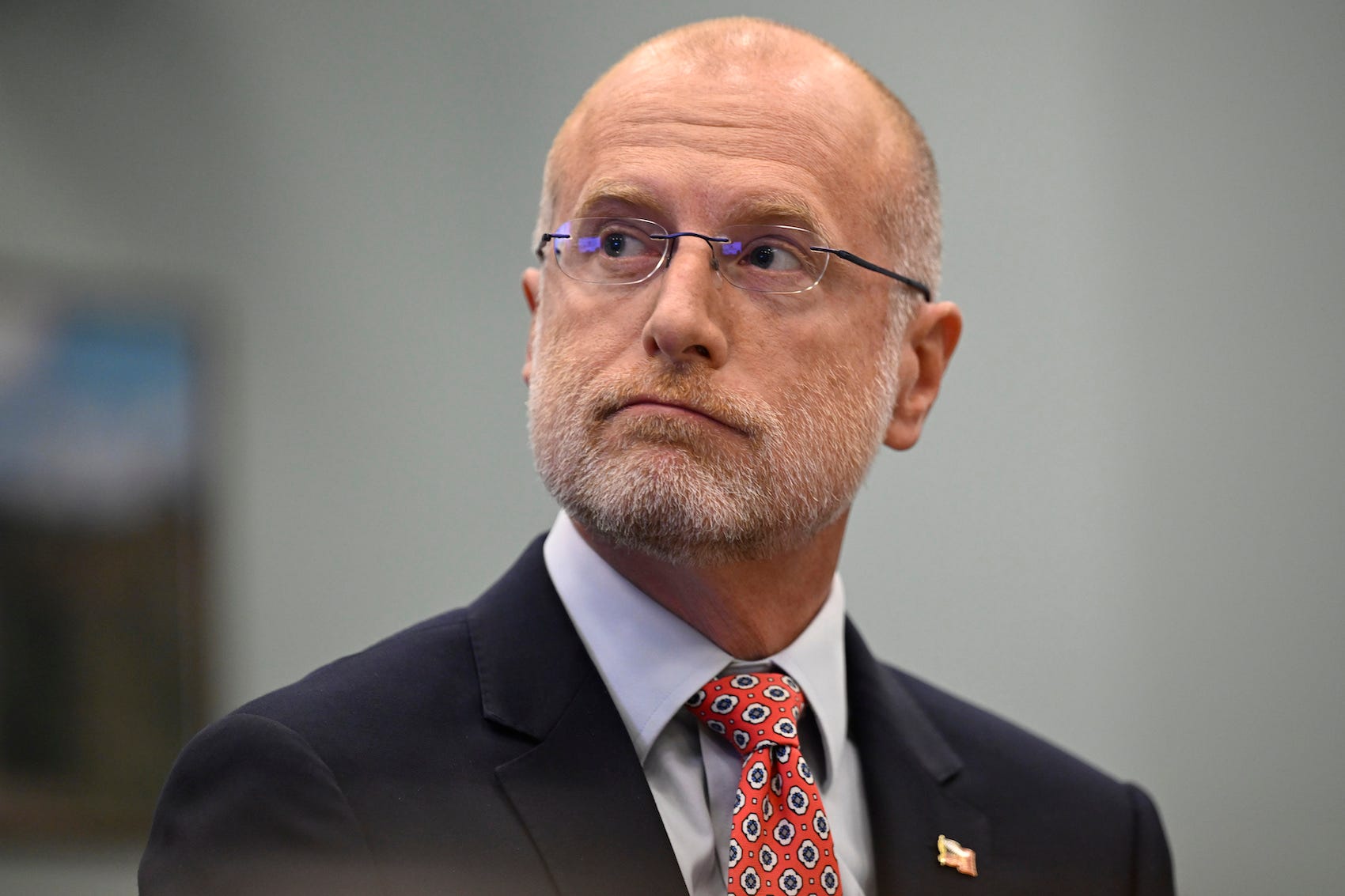
A member of the Federal Communications Commission pushed back against chair Brendan Carr’s threats to revoke TV licenses over critical coverage of the Iran War, urging broadcasters to recognize that Donald Trump’s attack dog doesn’t have the power he imagines.
“Once again, this FCC pretends it has the power to control news coverage,” Commissioner Anna Gomez said in a statement. “In reality, the FCC has vanishingly little power over national news networks. It licenses local broadcast states, not networks, and no licenses are up for renewal until 2028. Early renewal attempts are exceedingly rare, and the process is so demanding that any effort would almost certainly fail, especially given the well-documented First Amendment violations underlying these moves.”
On Saturday, Trump complained in a social media post about coverage of five U.S. tanker planes being struck down in Saudi Arabia, and Carr threatened that broadcasters that run “hoaxes and news distortions — also known as the fake news” could “lose their licenses.”
Even though any legal action by Carr would “not pass legal scrutiny,” Gomez noted that the chilling effect is “very real.”
From Jimmy Kimmel’s suspension to the spiking of Stephen Colbert’s planned interview with James Talarico, examples of major broadcasters buckling to threats of litigation or regulation during Trump 2.0 are numerous. ABC and CBS quickly settled Trump’s defamation lawsuits widely viewed as frivolous and easily winnable, wary of how Trump would wield the power of the government against their business interests. (One of the terms of the CBS settlement called for the hiring of a Trump-friendly ombudsman with little media experience.)
Urging broadcasters and the public to call Carr’s “bluff,” Gomez noted that none of the Trump FCC’s threats has led to an enforcement action to date.
“We cannot give this FCC more power than it has,” Gomez said. “Broadcasters, journalists, and the public must recognize these empty threats for what they are and fight to defend the First Amendment against any attempt to control or intimidate the press.”
Other news on Monday signaled that the tide may be shifting.
This morning, the BBC filed a 34-page motion to dismiss Trump’s lawsuit over a 12-second cut of a Panorama documentary showing his infamous speech on the Capitol Ellipse on Jan. 6, 2021. At different times of his remarks, Trump told the crowd to “walk down to the Capitol” and “fight like hell,” and the network cut the remarks together. The BBC apologized for the edit, but Trump filed a $10 billion lawsuit in Florida.
Before even addressing the First Amendment issues, the BBC said that the case should be dismissed because of a more fundamental flaw: The documentary never aired in the United States.
“President Trump brings this lawsuit against the United Kingdom-based BBC over a documentary that was produced in London, not Florida, and that it did not air in the United States,” the motion says. “Because the Court lacks personal jurisdiction over Defendants – and the Complaint fails to plead valid claims — the Court should dismiss this case with prejudice.”
Later in the day, former GOP vice presidential candidate and Trump ally Sarah Palin apparently abandoned her nearly decade-long quest to hold The New York Times liable for a quickly corrected error in a 2017 editorial. Two federal juries rejected her case, which was revived on appeal the first time because of a judge’s error.
Palin withdrew her appeal over the jury’s second verdict on Monday.
Epstein survivors reach deal with Bank of America

Survivors of Jeffrey Epstein’s sexual abuses “reached a settlement in principle” to end their class action lawsuit against Bank of America, a federal judge announced on Monday.
Senior U.S. District Judge Jed Rakoff said that attorneys told the court about the deal during a private telephone conference on March 12, a day after a hearing to schedule the deposition of billionaire Leon Black. Today was the deadline to complete all depositions in the class action lawsuit.
Black’s financial dealings with Epstein were at the center of key allegations in the lawsuit.
“Recent investigation into Epstein’s crimes has revealed that billionaire Wall Street financier Leon Black paid Epstein [funds,] including $170 million for purported ‘tax and estate planning advice’ from his Bank of America account,” the class action lawsuit filed in October noted.
Sen. Ron Wyden (D-Ore.), the top Democrat on the Finance Committee, pointed out that Epstein received “far more than other professional attorneys and advisors involved in Black’s estate planning.” Since 2022, Wyden has been pursuing a follow-the-money investigation into Epstein’s finances, and he asked the Internal Revenue Service for an explanation as to why Epstein was never audited.
In a statement today, Wyden celebrated the settlement and vowed to put out “more of our findings on the matter in the near future.”
“Bank of America’s employees repeatedly failed to conduct due diligence and report suspicious transactions to the U.S. Treasury Department, as required by law under the Bank Secrecy Act,” Wyden wrote. “Bank of America processed huge wire transfers from Black to Epstein, often in $10 or $20 million installments, without asking any questions, even though it was obvious that the money was being used for nefarious purposes. By failing to follow the law, Bank of America allowed for Epstein’s horrific abuse of women and girls to go undeterred.”
The Bank of America settlement resolves the last existing lawsuit in a spate of litigation Epstein survivors filed against financial institutions. In 2023, J.P. Morgan and Deutsche Bank settled similar complaints for $290 million and $75 million, respectively.
Judge Rakoff dismissed a fourth lawsuit against Bank of New York Mellon in February.
A settlement conference has been scheduled for April 2 at 11 a.m. Eastern Time.
Immigrants remain shielded pending SCOTUS fight
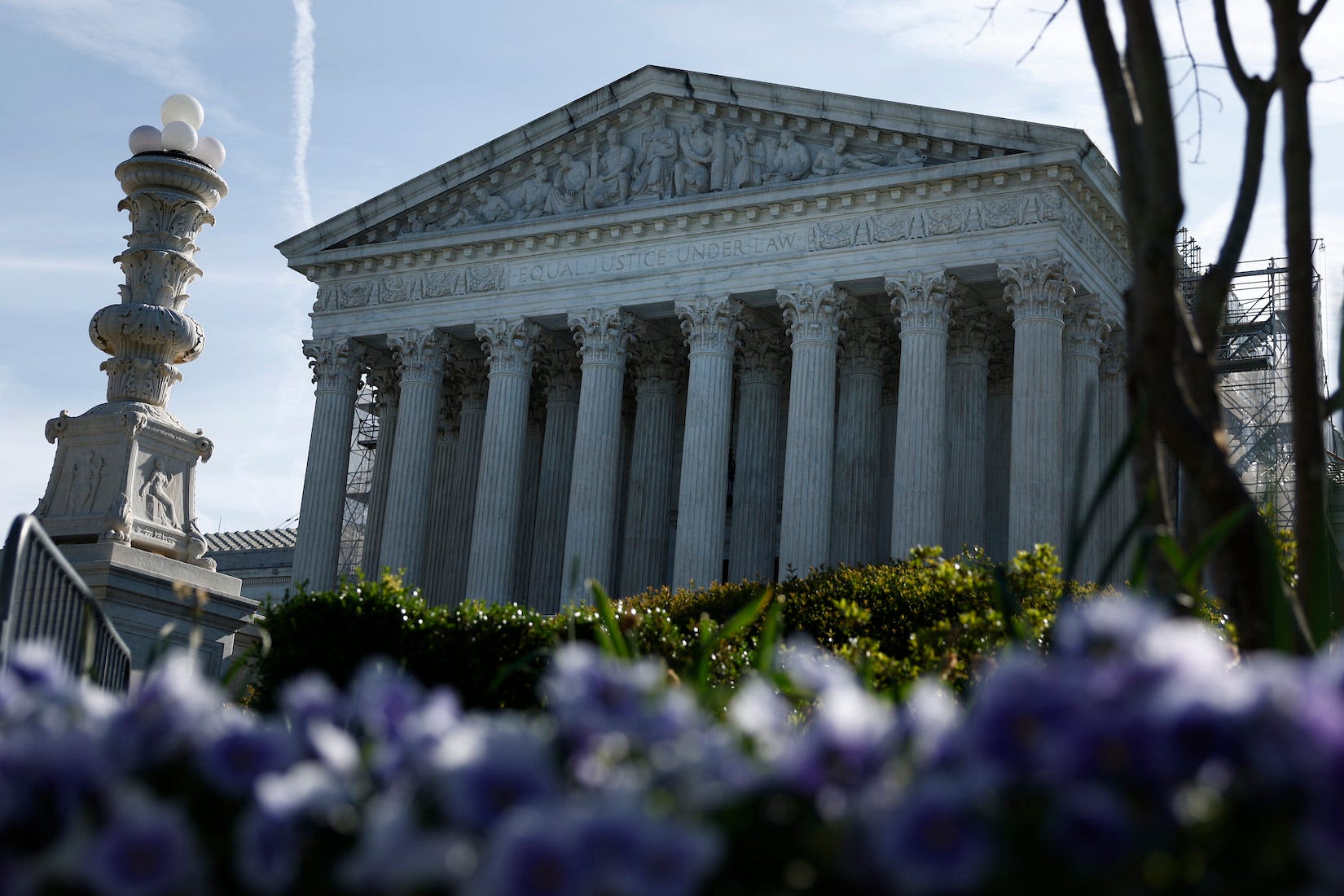
Haitian and Syrian immigrants can keep their temporary protected status (TPS) pending Supreme Court oral arguments over the Trump administration’s attempts to revoke it.
That was the upshot of a Supreme Court order on Monday agreeing to hear two of the government’s appeals of rulings blocking their attempts to revoke the TPS program for Haitian and Syrian immigrants.
For more than a decade and a half, the TPS program has shielded immigrants fleeing armed conflict, natural disasters and other extraordinary conditions. NPR reports that an estimated 6,500 Syrians and 350,000 Haitians have benefited from the program during the presidencies of Barack Obama, Joe Biden and Trump himself, during his first term.
During his second term, Trump has tried to end that status in 13 countries, and the justices fast-tracked arguments on the cases related to Haiti and Syria for the “second week of the April” session.
The Supreme Court deferred ruling on requests to pause orders blocking the TPS revocations — without granting or denying either one. For now, that leaves hundreds of thousands of immigrants shielded.
Fulton County ballots challenge update
Last month, a federal judge cancelled a hearing challenging the Trump FBI’s seizure of Georgia ballots from the 2020 election, ordering the parties to resolve the case through mediation.
On Monday, U.S. District Judge J.B. Boulee said those talks failed and scheduled a hearing for March 27 at 9 a.m. Eastern Time.
Thanks, Adam. It is hard not to give in to cynicism as Trump’s billionaire masters clog the courts with diversionary but destructive lawsuits. It’s small wonder that it’s such an uphill struggle to educate the public in the basics of civil law. I am grateful for the current crisis that has introduced me to more information than I ever suspected lay behind the scales of justice, thanks to the indirect tutelage of you, Andrew Weissman, and several other commentators.
Thank you Adam!