


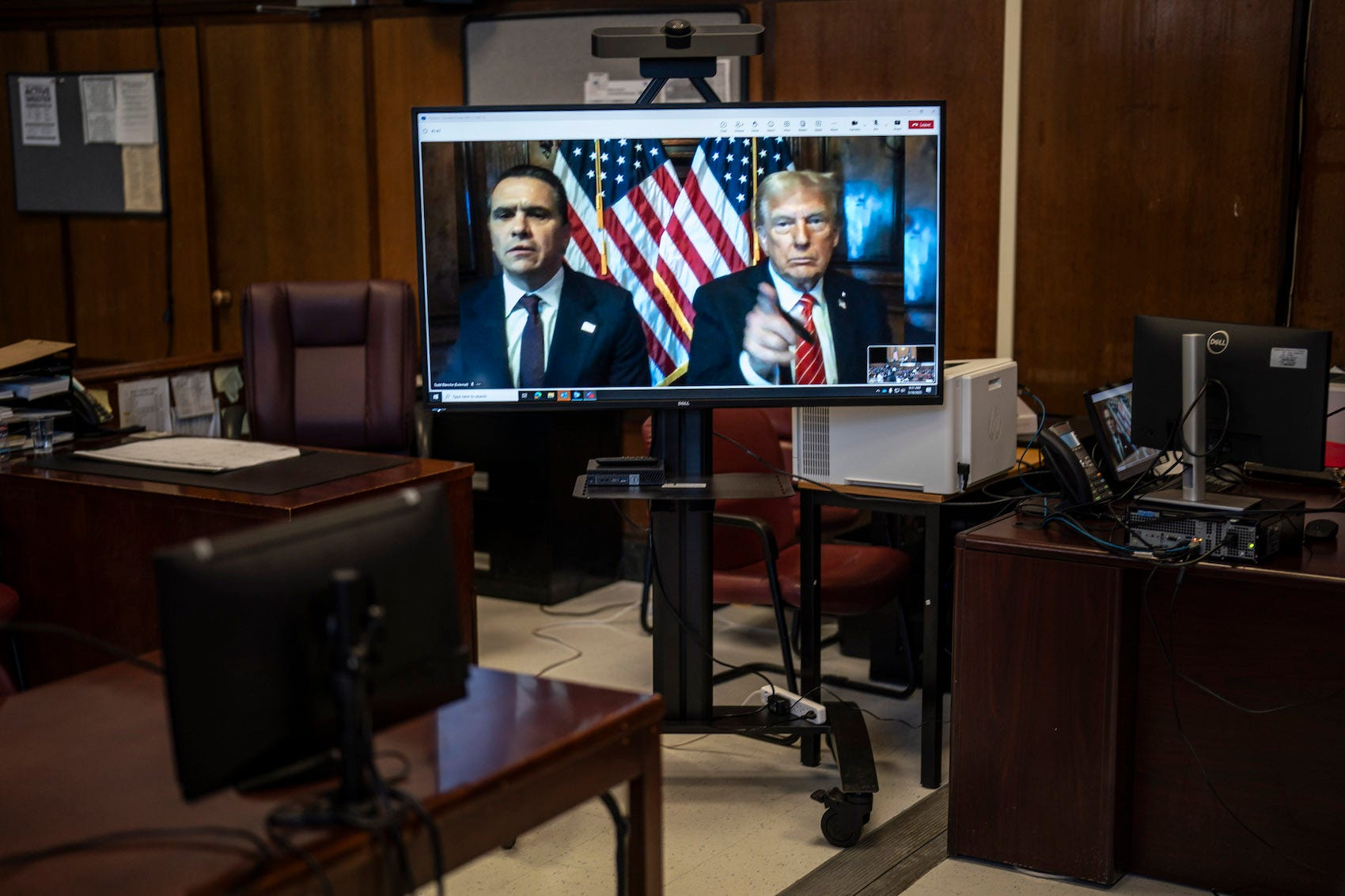
Stay tuned for a live-stream outside of Manhattan Federal Court about today’s hearing.
All Rise News subscribers will receive an alert and archive of the broadcast.
Donald Trump’s attempt to remove his appeal of his 34 felony convictions in New York to federal court following his sentencing appears to be fated for another defeat.
“I think we are beating a dead horse,” Senior U.S. District Judge Alvin Hellerstein said during nearly three hours of oral argument, swatting away arguments by Trump’s lawyer on a threshold issue.
The latest battleground in Trump’s ongoing effort to topple the verdict against him is both momentous and banal.
Trump’s criminal convictions have been a historic stain on his presidency that he has struggled to erase. The jury found that Trump repeatedly falsified business records to cover up hush money payments to Stormy Daniels from the voting public in an attempt to influence the 2016 presidential election.
Removing the case to a federal court would hand Trump a rare victory in his crusade to discredit his criminal prosecution, but the practical effects of such a transfer would be limited.
If Trump succeeded in transferring the case to federal court, little would change except the speed of his appeal. The state judgment would be entered in federal court. Trump would not be able to pardon his state conviction, but the case would have an expedited path to the Supreme Court — with one intermediate stop before the Second Circuit instead of two more state appellate courts.
‘Second bite of the apple’
Judge Hellerstein seems exceedingly unlikely to give Trump that fast track.
The judge rejected Trump’s attempts to transfer his case twice in the past — before trial and months after his criminal conviction.
After the second denial, the Second Circuit Court of Appeals sent the case back to Hellerstein’s court, finding that he should have explained why the Supreme Court’s immunity ruling didn’t grant Trump access to a federal forum. The Supreme Court’s ruling found that no evidence relating to a president’s official acts in office can be used against him.
During oral arguments on Wednesday, Hellerstein left little doubt that he would reject Trump’s effort a third time on multiple grounds.
First, Hellerstein indicated that Trump waived his right to transfer the case to federal court by first choosing to litigate the fallout of the Supreme Court immunity’s decision in state court.
“That’s a strategic decision,” the 92-year-old jurist said.
The Supreme Court’s immunity decision came down on July 1, roughly 10 days before Trump’s original sentencing date, and his defense attorneys challenged the case before Supreme Court Justice Juan Merchan.
With an adverse state court ruling imminent, Trump filed his second removal request nearly 60 days later — after the statutory 30-day clock expired. Hellerstein said that Trump’s lawyers were seeking a “second bite of the apple” after losing in New York, which the removal statute doesn’t allow.
Trump’s defense team argued that the circumstances of the case merit an exception because lawyers tried to give deference to the state trial judge.
“Whether Judge Merchan would have been pleased or displeased is totally irrelevant,” Hellerstein said, calling the decision to litigate in state court “fatal” to the defense.
‘Not above the law’
Trump already filed his opening brief to overturn his convictions with New York’s Appellate Division, First Department, the state’s intermediate appellate court. The judgment against Trump has been entered already at the trial court level.
For Hellerstein, that forms a separate basis to reject Trump’s effort to transfer the case to federal court.
“Here, there’s nothing for me to do,” Hellerstein said.
Trump’s appeal has focused on that finding in challenging the calling of witnesses like former White House communications director Hope Hicks and ex-director of Oval Office operations Madeleine Westerhout. The defense also contests the admission of certain social media posts by Trump.
Trump’s lawyer Jeffrey Wall, a partner at the firm Sullivan & Cromwell, noted that prosecutors called Hicks’ testimony the “nail in the coffin” of the defense.
The Manhattan District Attorney’s appellate lawyer Steven Wu noted that these witnesses and exhibits referred to Trump’s private acts.
Toward the end of oral arguments, Hellerstein noted that Trump is “not above the law.”
If the appellate process continues in New York State court, Trump’s convictions will face two more levels of review before the Appellate Division and the Court of Appeals, which is New York’s highest court. The Supreme Court would have the option to review the New York Court of Appeals decision.
Hellerstein reserved decision on the matter.
Thank you Judge Hellerstein for saying what we all have been thinking!
Thank you for all the effort that you put into following this news Adam.