


Happy Friday!
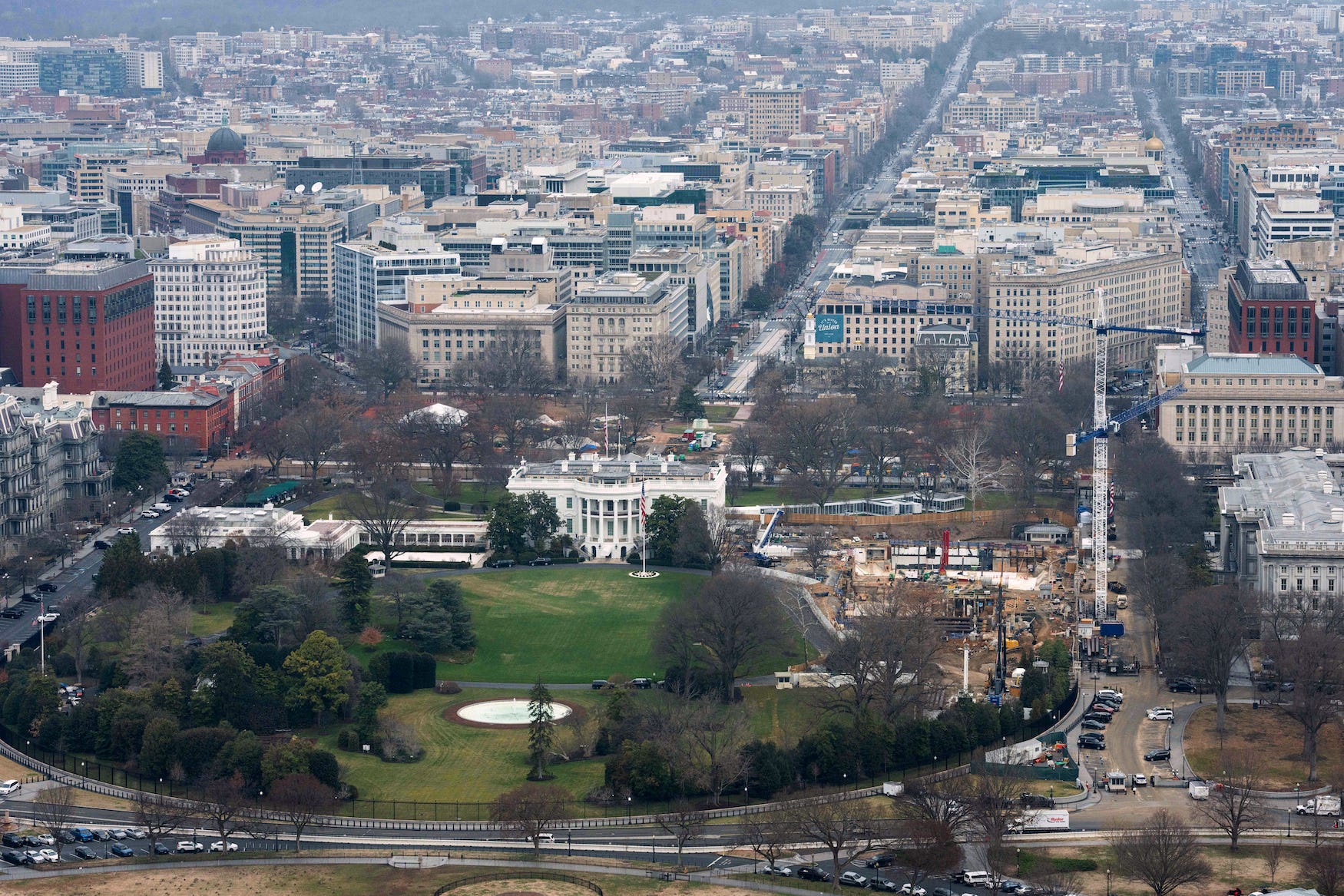
Tonight’s legal roundup starts with a SCOTUS shadow docket ruling temporarily allowing construction to continue on Trump’s East Wing ballroom. Then, the topics turn to important developments with the SPLC case and Trump playing politics with disaster relief in Oregon.
To continue receiving these legal roundups, consider becoming a free or paid subscriber if you aren’t one already.
Donald Trump might have a “get-out-of-law-free card” after all in the Supreme Court’s shadow docket.
On Friday afternoon, Chief Justice John Roberts temporarily lifted an injunction that had blocked above-ground construction of his East Wing ballroom in an emergency docket order that did not state any reasoning.
“IT IS ORDERED that the preliminary injunction entered on April 16, 2026, by the United States District Court for the District of Columbia, case No. 1:25-cv-4316, is hereby stayed pending further order of the undersigned or of the Court,” Roberts wrote.
The order pauses an injunction issued by U.S. District Judge Richard Leon, who initially blocked construction of Trump’s East Wing ballroom because of his refusal to seek Congress’s permission to raze and replace the historic building.
Leon later revised his initial order to permit construction on the below-ground security bunker.
The D.C. Circuit’s majority agreed with Leon, finding that Trump sought a “get-out-of-law free card” by circumventing congressional approval.
“The bold assertion that the Executive can act with utter lawlessness, destroying treasured national landmarks and harming the interests of individuals, and that no court can stop it flouts our constitutional order,” U.S. Circuit Judges Patricia Millett and Bradley Garcia wrote. “And it is no basis on which to claim the favor of courts’ equitable judgment. While this court accords great weight and deference to invocations of national security and the safety of the President, such arguments are not an automatic get-out-of-law-free card.”
When the D.C. Circuit decided the case, the East Wing ballroom had been estimated to cost $400 million, supposedly funded through private donations. Studies showed those donors reliably receiving favorable government treatment — with suspicious timing, and the price tag for the construction ultimately ballooned to more than $900 million, mostly on the taxpayer’s dime, according to the Washington Post.
Despite lopsided defeats before federal judges, Trump has had a far better record before the Supreme Court in applying for emergency relief.
In a study released this past March, the Brennan Center found that the Trump administration prevailed roughly 80 percent of the time that it sought emergency relief. Those rulings typically do not state the reasoning for reversing lower court decisions, even on a temporary basis.
Feds stonewall the SPLC
As an October trial rapidly approaches, the Southern Poverty Law Center has hit a stonewall in its effort to get prosecutors to disclose mountains of information about its historic cooperation with federal law enforcement.
That’s a key issue because the Trump Justice Department accuses the SPLC of defrauding donors by telling them that they are fighting hate groups, when they paid certain extremists to become informants.
The SPLC notes that the now-shuttered informants program produced information that the historic civil rights group shared with law enforcement. In one instance, the SPLC revealed that informant-generated information disrupted a neo-Nazi’s plans for a terrorist attack on a Las Vegas synagogue and gay bar.
The Trump Justice Department is now arguing that it doesn’t need to disclose the information because the SPLC already has it.
“There is no requirement that the government seek out evidence already available to the SPLC,” prosecutors wrote.
In the same motion, the SPLC admits that the FBI could have mountains of evidence showing the group’s longtime cooperation with federal law enforcement.
On Thursday, prosecutors said that they asked the FBI to run the search terms “Southern Poverty Law Center” and “SPLC” on the bureau’s Sentinel database, leading to thousands of hits.
“The result was in excess of 65,000 positive hits in over 170 cases,” prosecutors reveal.
But they won’t let the SPLC have access to that evidence, claiming that it would be too onerous to sift through those hits for relevant information.
“Each occurrence will then need to be read to determine if the document appears to be relevant to the SPLC’s request. If a particular document appears to be relevant, the associated case file will need to be read to determine what information within the case file is relevant.”
The Supreme Court precedent of Brady v. Maryland requires the government to disclose favorable information to the defense.
The SPLC has asked U.S. District Judge Emily Marks, a Trump appointee, to order the government to comply with its requests.
Judge blocks Trump’s disaster relief funds scheme
Throughout his second term, Trump has held billions of federal tax dollars hostage from states to pressure them to advance his political agenda.
That trend inspired hundreds of federal lawsuits and scores of injunctions blocking Trump’s scheme to coerce states into supporting his immigration agenda, abandon sanctuary protections, or conform to his culture-war hobbyhorses.
On Thursday, a federal judge in Oregon blocked the Trump administration’s attempt to tie disaster relief for the city of Salem to rebuking so-called “gender ideology” and diversity, equity and inclusion.
Chief U.S. District Judge Michael McShane recognized that such a policy was the definition of arbitrary and capricious.
“One of the key roles of the federal government is to provide communities with the tools to recover from and to mitigate natural disasters,” McShane wrote in the introduction of his ruling. “Yet, as wildfires, severe storms, and floods routinely ravage through the State of Oregon, disaster relief has become a tool to advance unrelated executive policy. Although it is hard to imagine the connection between the use of preferred pronouns and the fires currently burning through central Oregon, Defendants (United States agencies and their senior officials) have announced new conditions for federal disaster-related funding. Specifically, they seek to prohibit the promotion of ‘gender ideology,’ diversity, equity, inclusion, and more.”
It is the worst year for wildfires that the state of Oregon has experienced on record, and the city of Salem faced a different natural disaster late last year in the form of a winter storm that damaged a wastewater treatment plant.
Salem authorities sought more than $1 million in federal money to repair the plant and guarantee residents could continue to drink safe and clean drinking water.
When that money came with the Trump Department of Homeland Security’s “standard” terms including its anti-transgender and anti-DEI crusade, Salem sued in federal court — and won.
“Nowhere in the briefings, the regulations, or the executive orders does the government attempt to define ‘gender ideology’ or DEI in any helpful way,” the judge noted in a footnote.
During Biden’s term, there was a manufactured controversy based on false claims that federal disaster relief programs slowed aid to hurricane-hit areas in Florida that voted for Trump. The Federal Emergency Management Agency investigated those allegations thoroughly and found “no evidence” to support them, but that misinformation campaign generated outrage based on the understanding that disaster relief shouldn’t be politicized.
Now, Trump is openly playing politics with relief money in a state facing natural disasters on an unprecedented scale — and routinely holding up federal taxpayer money for nakedly partisan ends until judges force him to release the money. Trump’s latest defeat in Oregon marks only the latest in a series.
Thanks Adam for another excellent one of your legal recaps to keep us so well informed in terms all us non-lawyers can understand. It didn’t surprise me that Trump succeeded on getting an emergency stay from the Supreme Court’s “Shadow Docket”. It was written with no explanation by his number one enabler Chief Justice Roberts who once again gave a “middle finger “ to the lower courts who got it right. If the Democrats take control of both chambers of the Congress in the Midterms, Supreme Court Reform and development of strong Ethics Rules and Regulations for all the Justices needs to be a high priority.
"Emergency docket" is the traditional legal term for how the U.S. Supreme Court handles urgent requests, while "shadow docket" is a popular nickname coined by legal scholars to describe those fast-tracked, un-argued orders.”
So, seriously, what’s the “emergency” here? And for how long will the injunction stay lifted? Until the ballroom (and whatever else) construction is completed?
The real “emergency” is the State of Emergency in America that Trump is “constructing”.
Attention John Roberts …
Felix Frankfurter: "Our tasks involve deliberation, reflection, meditation.... When opinions have jelled, the case is handed down."