


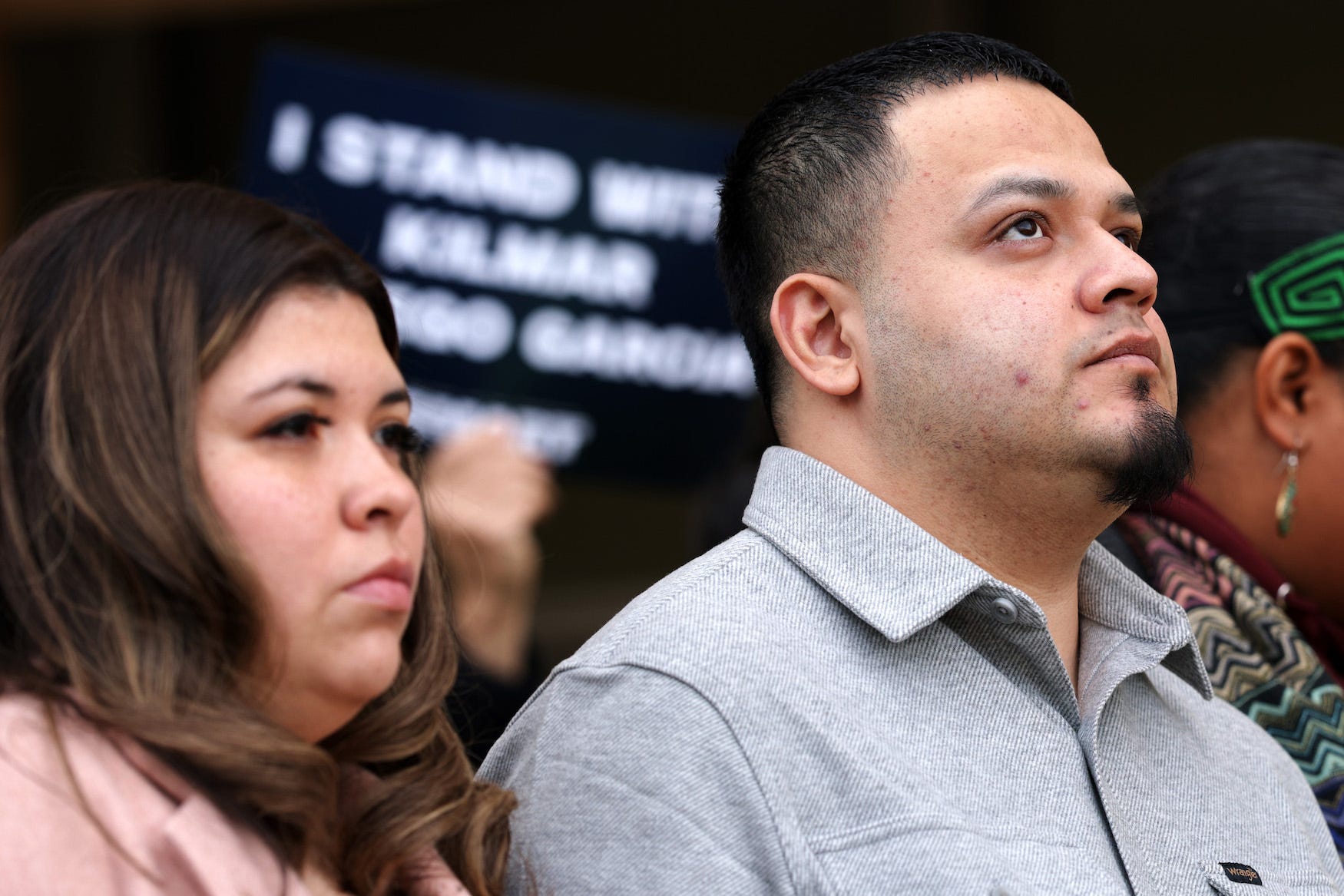
Look out for daylong coverage of Abrego’s hearing on All Rise News, including courthouse dispatches and live-streams.
Support this on-the-ground coverage by becoming a subscriber, if you are not one already.
NASHVILLE — Ever since his return from a prison in El Salvador in June, Kilmar Abrego Garcia had been ushered into federal court in Tennessee for every court appearance in his criminal case.
On those other occasions, Abrego had been in criminal or immigration custody, but he entered into court Thursday as a free man for his vindictive prosecution hearing, save for the conditions of his pretrial release. That was made possible by a series of legal victories on the setting of bond and release from immigration detention.
Throughout the proceedings, Abrego sat at the defense table with his attorneys, listening to the proceedings through headphones providing live translation into Spanish.
In one of the hearing’s most significant revelations, the prosecutor who charged Abrego testified that he learned about a key witness from an aide for Deputy Attorney General Todd Blanche on a Sunday night, hours after receiving the case. The day of Abrego’s indictment, the district’s criminal division chief resigned in protest, and the court heard today that he wrote a memo explaining the reasons he believed the case shouldn’t have been charged.
The hearing itself is a defense victory
The fact that the hearing is taking place is a victory for Abrego, who is charged with smuggling immigrants in 2022.
For this hearing to take place, U.S. District Judge Waverly Crenshaw Jr. had to find a reasonable likelihood that the government is prosecuting Abrego because he exercised his right to challenge his detention in El Salvador. In October, Crenshaw found that Abrego’s defense team met that burden, largely based on former Trump attorney turned Deputy Attorney General Todd Blanche’s comments during an interview with Fox’s Laura Ingraham.
“Strikingly” to the judge, Blanche said that Abrego’s criminal investigation began because a judge questioned the government’s decision to send Abrego to El Salvador.
As a result of that preliminary finding, the burden shifts to the government to overcome the presumption of vindictiveness and show that they brought the criminal case for a legitimate purpose.
The witness testimony
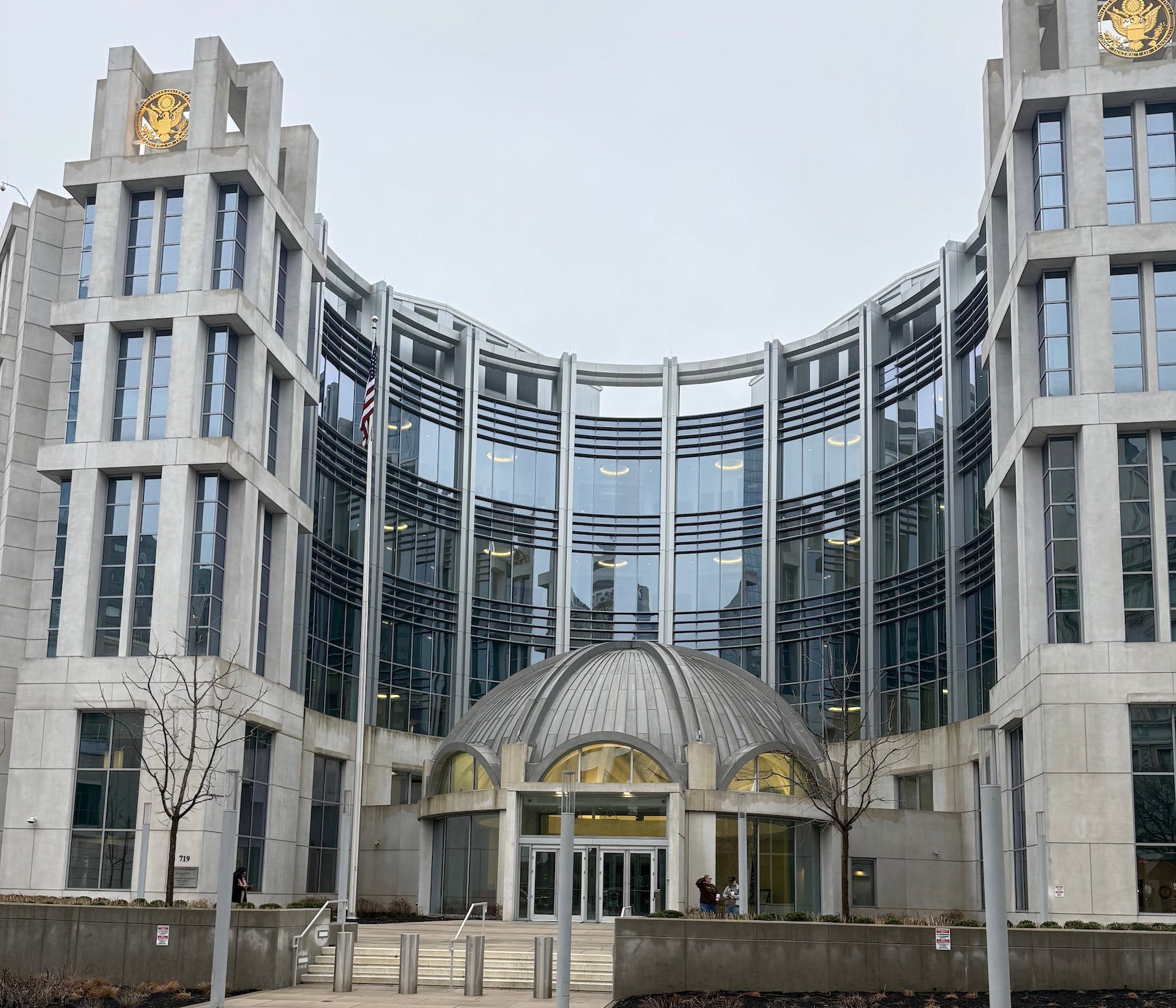
The government had planned to call three witnesses, but only two took the stand:
Rana Saoud, the Special Agent in Charge of the Nashville office of Homeland Security Investigations
Robert McGuire, the former Acting U.S. Attorney for the Middle District of Tennessee.
As the first witness, Saoud testified that she made the decision to open an investigation into Abrego after reading an article in the conservative Tennessee Star in April 21, 2025, which was published more than a week after the Supreme Court ordered Abrego’s release from El Salvador.
The Star article reported on the existence of bodycam footage of Abrego’s November 2022 traffic stop in Putnam County, Tennessee. The Tennessee Highway Patrol let Abrego go without a speeding ticket at the time, but the footage sparked a smuggling investigation nearly three years later.
During cross-examination, Abrego’s attorney Rascoe Dean noted that the national news media published the footage long before the Star did and Trump commented on it.
“You didn't speak to Secretary Noem about this case?” Dean asked.
“That would be highly inappropriate, no,” Saoud said.
Saoud also denied any contact with senior Justice Department officials or the White House.
Nashville’s ex-top prosecutor
Former Acting U.S. Attorney Robert McGuire strenuously denied political interference from Main Justice or the White House on direct examination..
Associate Attorney General Stanley Woodward, who previously represented Trump’s former criminal co-defendants and now serves in the third top position of his Justice Department, led McGuire’s questioning.
“Who made the decision to seek an indictment of Mr. Abrego?” Woodward asked.
“I did,” McGuire replied, denying any pressure from Main Justice or the White House.
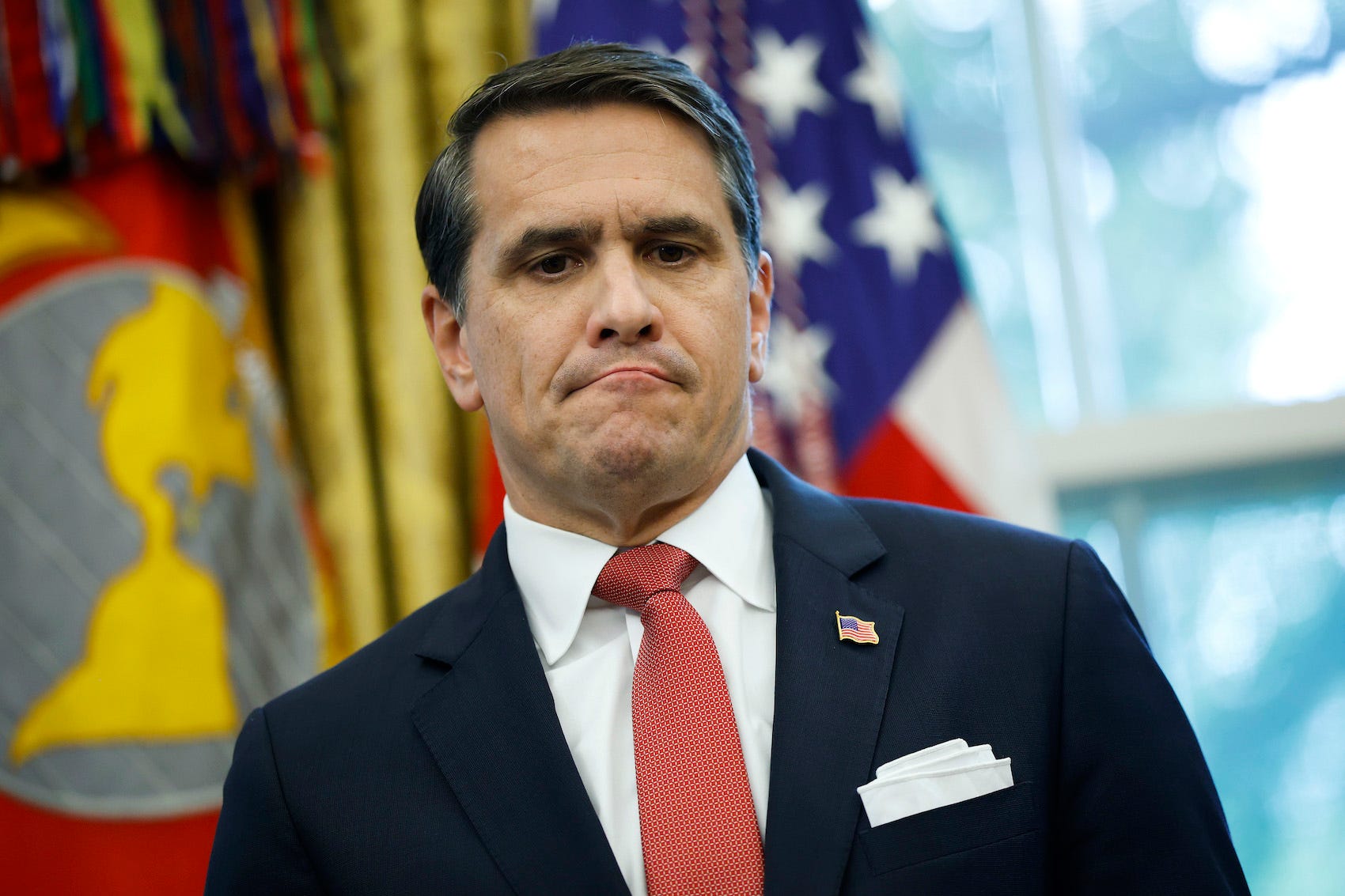
Three days before Abrego’s indictment, Trump’s ex-attorney turned Deputy Attorney General Todd Blanche’s aide Aakash Singh instructed McGuire to hold the draft of the document for “clearance,” presumably from the Deputy Attorney General’s office. In December, Crenshaw found that the documents confirmed that “McGuire did not act alone.”
McGuire claims that he spoke to Singh for “logistical-oriented” reasons related to outreach to cooperating witnesses against Abrego in other districts. He noted that the license plates of Abrego’s vehicle were linked to one of those witnesses, who was convicted of an immigrant smuggling operation. He rattled off other evidence that his office used to build the case, such as license plate reader scans and cooperating witness testimony.
The 2022 bodycam footage alone wouldn’t have been sufficient to charge Abrego with smuggling offenses, McGuire said.
‘High command’
Now the No. 2 to Senate-confirmed U.S. Attorney Braden Boucek, McGuire doesn’t begin his testimony with a clean slate.
Judge Crenshaw made McGuire’s private communications with Blanche’s office public in December, showing Nashville’s then-top federal prosecutor in frequent contact with Main Justice. McGuire received the case on Sun., April 27.
Hours later that evening, Singh sent McGuire an email about cooperating witness Jose Ramon Hernandez Reyes, a three-time felon at the heart of the government’s case. McGuire admitted that he didn’t previously know Hernandez Reyes before that Sunday night email, and he believed the timing signaled its importance.
Three days later, McGuire promised to keep “high command looped in” to his investigation, and he testified that he started to draft a potential complaint on April 29, before he said that Singh asked him about writing one.
McGuire said that he decided on a so-called speaking indictment against Abrego because of the massive public attention.
“I knew that this would be a major media story,” he said.
Asked whether he anticipated that a vindictive prosecution motion might be filed, McGuire replied: “Yes, absolutely.”
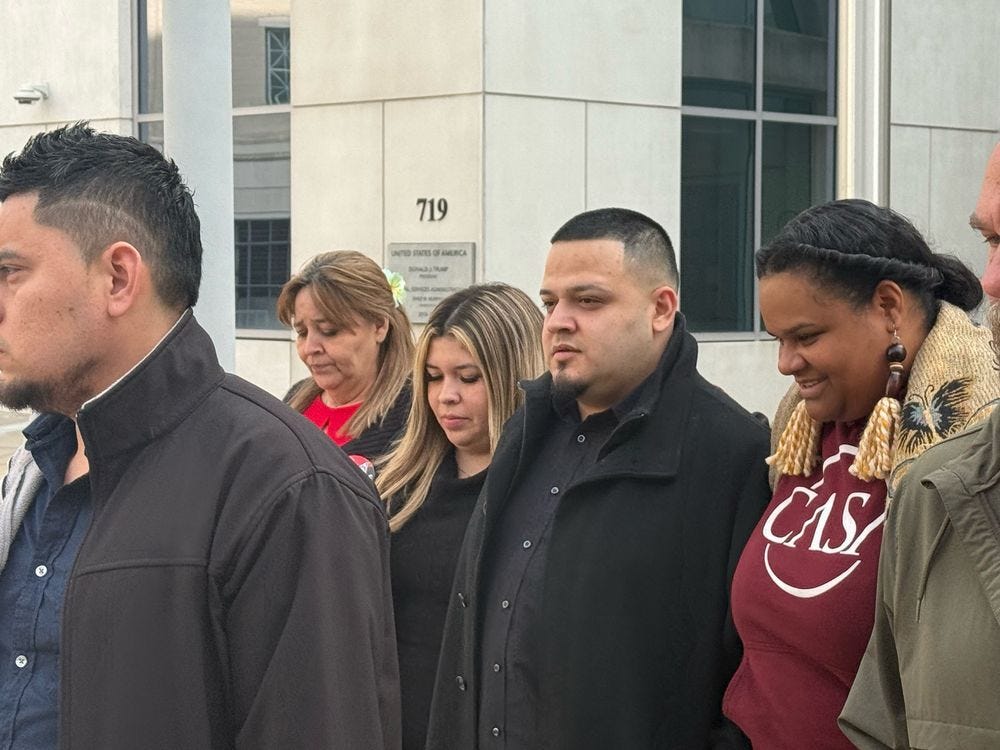
McGuire now claims that he didn’t understand what kind of “clearance” Singh referred to in his message.
“We weren’t asking for permission,” McGuire claimed, referring to Abrego’s indictment.
Attorney Ben Schrader, the Middle District of Tennessee’s longtime chief of the criminal division, quit on the day of Abrego’s indictment. McGuire acknowledged that Schrader recommended against the prosecution and memorialized his reasons in a memorandum that he wanted to be forwarded to “D.C.” The memo never was forwarded, the court heard.
Dean, now a member of Abrego’s legal team, is Schrader’s former longtime deputy.
‘An extraordinary outlier’
Handling McGuire’s cross-examination for Abrego’s defense team is David Patton, the former leader of the Federal Defenders of New York.
Patton began his questioning by describing the Justice Department’s purge of prosecutors assigned to Jan. 6th cases, the special counsel investigation, and districts across the country. He also cited Attorney General Pam Bondi’s infamous memorandum referring to Justice Department attorneys as the president’s lawyers.
“You like your job?” Patton asked.
“Yes,” McGuire replied.
Asked whether he wanted to remain in the Justice Department, McGuire replied that he wouldn’t do something that he believed was wrong to keep it. He acknowledged under cross-examination that he never defended a vindictive prosecution motion before Abrego’s case, but he expected one before this charging decision.
McGuire agreed when asked if the case is "an extraordinary outlier" in terms of the time lag between the 2022 traffic stop and the charging decision. He also acknowledged that he didn’t know about the lead cooperating witness against Abrego until receiving an email about him from Blanche’s aide.
When Schrader resigned in protest, McGuire said he tried to persuade the departing criminal division chief to stay.
“He’s an excellent prosecutor,” McGuire said of Schrader, calling him a friend. “He’s an honorable person.”
On June 6, Abrego was returned to the United States for prosecution from El Salvador, and McGuire received a call from Blanche congratulating him and thanking him for the indictment, according to Patton.
McGuire acknowledged the conversation took place, calling it “pretty standard.” The evidentiary hearing ended at 2 p.m. Central Time.
Judge Crenshaw gave the parties 30 days to submit written arguments based on the evidence that emerged in court.
Many thanks for the on-the-ground granular detail, Adam.
Always appreciate your breaking down these issues with clarity. Thank you for continuing to follow Abrego’s story.