


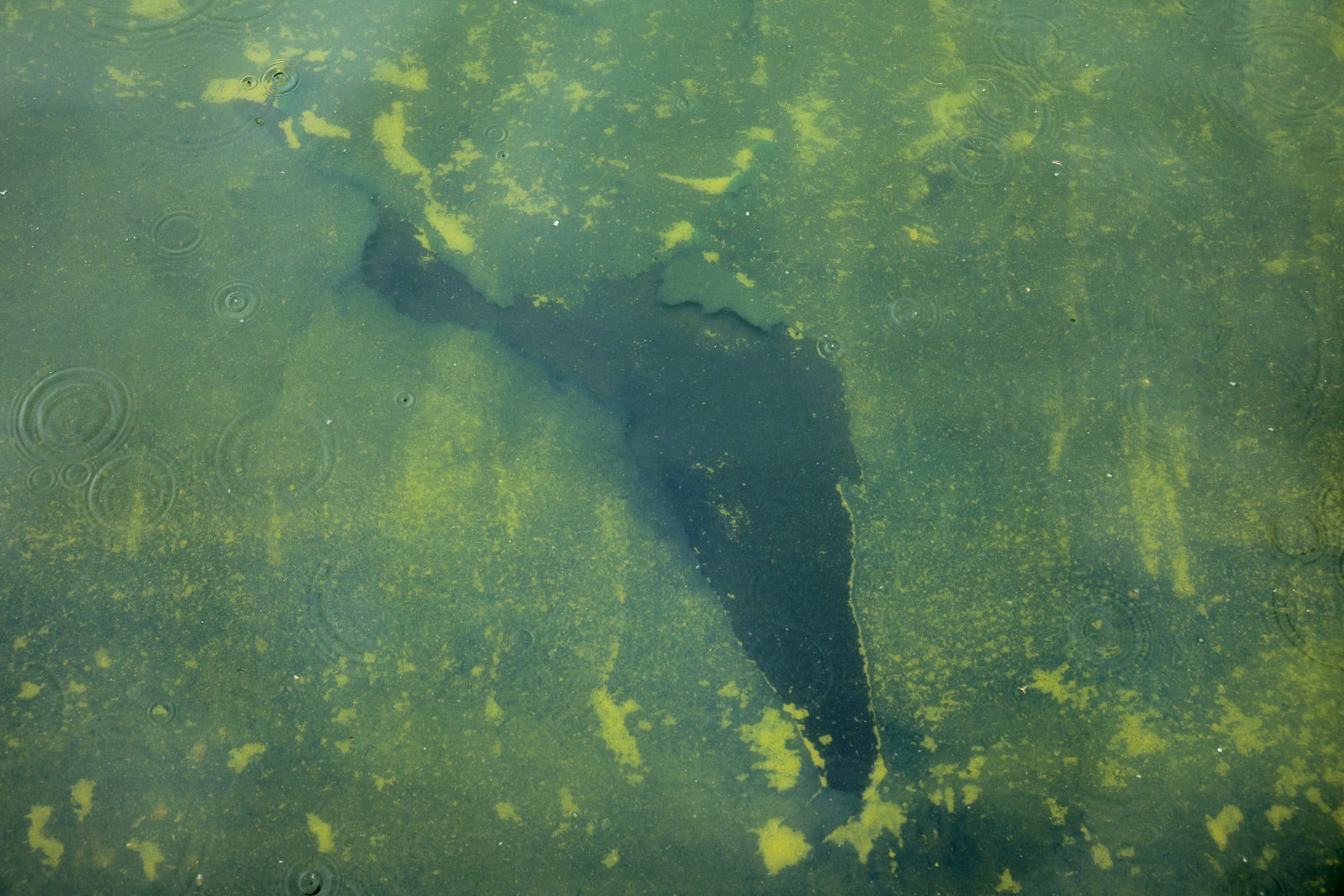
Tonight’s legal roundup kicks off with a deep dive into reflecting pool revelations.
Later in the newsletter: New Mexico authorities sue the Trump Justice Department seeking evidence for their Epstein investigation, and the White House is still spinning the Russia probe.
Despite his cascade of lies surrounding the Lincoln Memorial Reflecting Pool, Donald Trump turned out to be right about one thing.
Someone actually took a knife to the sealant, but it wasn’t Olympic athlete David Hearn. It wasn’t any “vandal,” and there was no criminal conspiracy. As it turns out, a National Park Service engineer cut off a stretch of loose liner to mitigate the damage of a botched installation job, Hearn’s lawyers have just revealed.
“On July 13, the USAO-DC special agents photographed damage throughout the pool, accompanied by a National Park Service (NPS) engineer who informed the agents that he had personally cut loose liner or coating with a knife to prevent further peeling,” Hearn’s attorneys wrote in a 28-page filing.
Hearn explained that there was a good reason for that: “The government’s own engineer determined that it was better to cut off the peeling sections than to let them flap around.”
Possible Action Item: Support civil society
The Trump Justice Department was forced to move to dismiss the case against Hearn and others because defense attorneys made pursuing the prosecution untenable.
Civil society groups came to Hearn’s defense, including the Democracy Defenders Fund.
The U.S. Attorney’s office for Washington, D.C., led by ex-Fox personality turned top prosecutor Jeanine Pirro, asked a judge last week to dismiss Hearn’s indictment. Prosecutors also have dropped cases against others accused of similar crimes. The government admitted that a “rushed and flawed installation process” by contractor Atlantic Industrial Coatings was to blame, not vandalism.
Despite those admissions, prosecutors asked to dismiss Hearn’s indictment “without prejudice” — meaning that the government could pursue the charges again later.
Hearn’s attorneys opposed that request on the grounds that it would let the government revive a “politically motivated prosecution,” and they noted that Trump has been clamoring for that outcome.
“That is particularly true when the President of the United States has already voiced his vigorous disagreement with USAO-DC’s dismissal of the case against Mr. Hearn — saying that the U.S. Attorney ‘choked,’ ‘folded like an umbrella,’ and ‘made a mistake,’ and doubling down on the false claim that the damage was caused by vandalism — and has previously not hesitated to insinuate himself into cases that historically have been the exclusive province of the DOJ,” the filing states.
On Tuesday, The New York Times revealed the backstory of Pirro’s Oval Office meeting with Trump and Interior Department Secretary Doug Burgum. Prosecutors blamed the Department of the Interior for allegedly providing “less than fulsome information” about the case. Burgum continued to defend Trump’s discredited theory about vandals, and Pirro brought a white box of evidence into the White House to defend the decision.
Hearn’s defense team took on the narratives of both parties, slamming Pirro’s “unprofessional and unethical” actions and stating that the Justice Department and Interior Department worked “hand-in-glove” on the investigation.
Before Hearn ever visited the pool, prosecutors had access to photographs and videos of damage to the reflecting pool, and they received a “Damage Assessment” showing peeled sealant far away from any area Hearn touched.
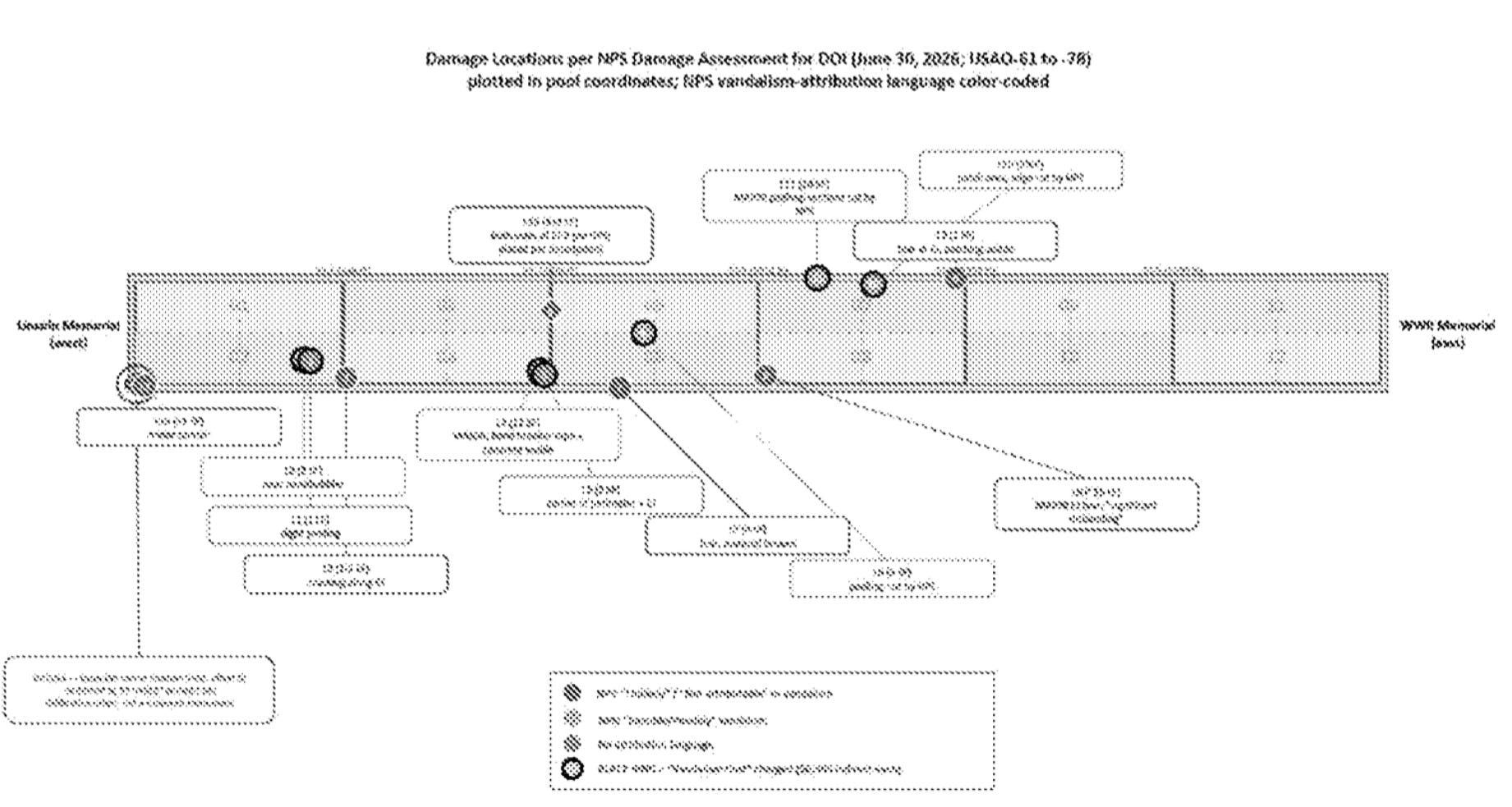
Hearn’s filing suggests that Pirro has bigger concerns than holding her job, stating that she “wholly disregarded DC Bar and DOJ ethics rules” by violating the defendant’s presumption of innocence by opining on his guilt and discussing the evidence during a press conference and on her old right-wing cable network.
If the judge doesn’t immediately dismiss the case with prejudice, Hearn seeks a ruling opening up the grand jury records.
Watch my video breakdown of this development here.
New Mexico sues Blanche over Epstein probe
During his recent confirmation hearing, Acting Attorney General Todd Blanche swore under oath that he would cooperate with a criminal investigation by state prosecutors in New Mexico into Jeffrey Epstein’s sex trafficking scheme.
“We’re continuing to work with them,” Blanche testified.
The state’s Attorney General Raúl Torrez apparently has little confidence in Blanche’s response, filing a federal lawsuit against him and the Justice Department that he leads seeking access to evidence needed for their investigation.
“New Mexico has a duty to protect survivors and investigate crimes committed in our state so that perpetrators can be held accountable,” Torrez said in a statement. “We asked the Department of Justice to cooperate by providing access to records that may be critical to identifying victims, witnesses, and additional criminal conduct at Zorro Ranch. Their delay is actively hurting our criminal investigation and delaying justice Epstein survivors deserve.”
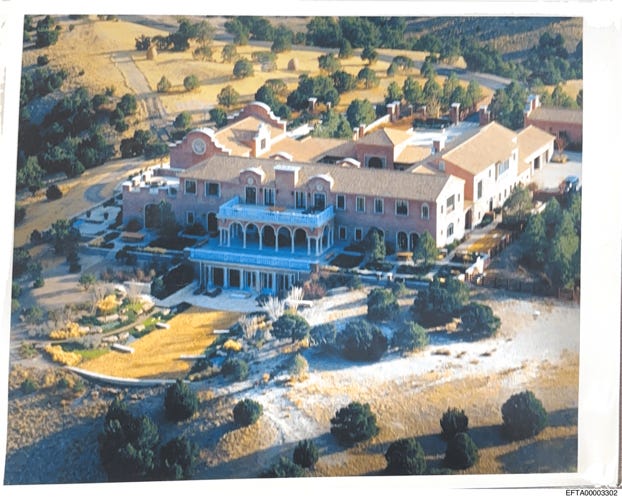
Epstein’s Zorro Ranch outside of Santa Fe was one of several properties in which survivors reported sexual abuse.
In a 40-page federal lawsuit, Torrez emphasizes that several administrations failed victims, and he describes the Trump Justice Department’s noncooperation with New Mexico authorities as their third betrayal.
First, prosecutors reached a 2008 non-prosecution agreement with Epstein that hid the lenient terms from survivors, and then there was the bungled rollout of the investigative files, exposing sensitive victim photographs and information while filling other documents with excessive redactions.
Now, Torrez said: “USDOJ and Acting Attorney General Blanche are refusing to facilitate the investigation of state law crimes by hiding information about Epstein and his co-conspirators from Attorney General Torrez and state law enforcement, when New Mexico is one of few jurisdictions that still may have an opportunity to hold Epstein’s associates accountable or otherwise provide some sense of justice to survivors.”
The lawsuit states that federal prosecutors asked New Mexico to stand down in 2019, the year of Epstein’s indictment in New York.
This past May, New Mexico sent a formal demand for evidence — known as a Touhy request — seeking, among other things, unredacted versions of certain documents released from the Epstein files.
“NMDOJ’s Touhy request informed USDOJ that NMDOJ is currently ‘investigating potential felony offenses’ under New Mexico’s state criminal code, ‘including but not limited to homicide, kidnapping, criminal sexual penetration, criminal sexual contact, and human trafficking,’” the lawsuit states, referring to an unverified anonymous tip that two girls were strangled and buried at Zorro Ranch.
New Mexico authorities allege that some of the requested files conceal information at the heart of their investigation, including notes from an FBI interview with a witness stating: “The first assault happened in New Mexico; EPSTEIN and [REDACTED] were both there in the room.”
Read the lawsuit in full here.
‘Wittingly or unwittingly’
Throughout Trump’s second term, a pattern has emerged.
The White House or its allies release a stash of once-sensitive or declassified documents, claiming that the files support popular MAGA conspiracy theories, damage one of Trump’s enemies, or both. Then, upon scrutiny, the documents reveal information damaging to Trump and his conspiracy theories.
Disgraced journalist John Solomon, a figure from Trump’s first impeachment who is now serving on a White House task force, gave a prime example of the practice on Wednesday. He released declassified documents revealing that the FBI feared Trump had been “wittingly or unwittingly” manipulated by the Russian government.
The FBI investigation described in the documents has a quirky code name: “Oxferd comma,” intentionally misspelled for undisclosed reasons.
Dated one day before Robert Mueller’s appointment as special counsel, the declassified FBI memo found “an articulable factual basis that reasonably indicates that President Donald J. Trump may be or has been, wittingly or unwittingly, involved in activities for or on behalf of the Government of the Russian Federation which may constitute violations of federal criminal law or threats to the national security of the United States.”
“The goal of the investigation is to determine if President Trump is or was directed by, controlled by, and /or coordinated activities with, the Russian Federation in a manner constituting a threat to the national security of the United States and / or a violation of federal criminal statutes,” the memo continues. “In addition, this investigation will also seek to determine whether President Trump and others yet to be named obstructed and /or conspired to obstruct any associated FBI investigation.”
Mueller ultimately did not find enough evidence to charge Trump with a criminal conspiracy with the Russian government, but his findings fell far short of Trump’s claim of “COMPLETE AND TOTAL EXONERATION.”
“Although the investigation established that the Russian government perceived it would benefit from a Trump presidency and worked to secure that outcome, and that the campaign expected it would benefit electorally from information stolen and released through Russian efforts, the investigation did not establish that members of the Trump Campaign conspired or coordinated with the Russian government in its election interference activities,” the Mueller report found.
Mueller found that the Trump campaign “welcomed” the Kremlin’s election interference, charged 34 people and three companies in connection with his investigation, and convicted eight of them. The report showed that Trump’s campaign shared internal polling data with Konstantin Kilimnik, whom the GOP-dominated Senate Intelligence Committee described as a Russian asset.
The former special counsel also found that Trump may have obstructed justice at least 10 times, but he declined to reach a traditional prosecutorial judgment because he couldn’t indict a then-sitting president. The FBI memo cited Trump’s firing of James Comey as one of those possible instances of obstruction which prevented prosecutors from getting a “complete picture” from the investigation.
“Accordingly, while this report does not conclude that the President committed a crime, it also does not exonerate him,” the report concluded.
Even though the FBI’s memos were consistent with Mueller’s findings and evidence, Solomon suggested that the declassified memos could support an ongoing “grand conspiracy” investigation into Trump’s enemies.
You can read the memo in full here.
Great report Adam! Getting to the bottom of things (pun intended 😬).
Thanks Adam for another one of your most valuable and informative posts
laying out the facts on these two most important issues. The case against David Hearn should be immediately dismissed with prejudice and if the Judge doesn’t decide to do so his lawyers should file a motion for the grand jury transcripts. In addition, he should seek damages for defamation and for his reimbursement for legal fees. I’ve always wondered what Putin has to hold over Trump for how he always rushes to defend him. Thanks Adam for all your hard work in keeping us all well informed. I’m glad to support you as a paid subscriber. It’s money well spent.