


Deep context and clarity about the cases that matter.
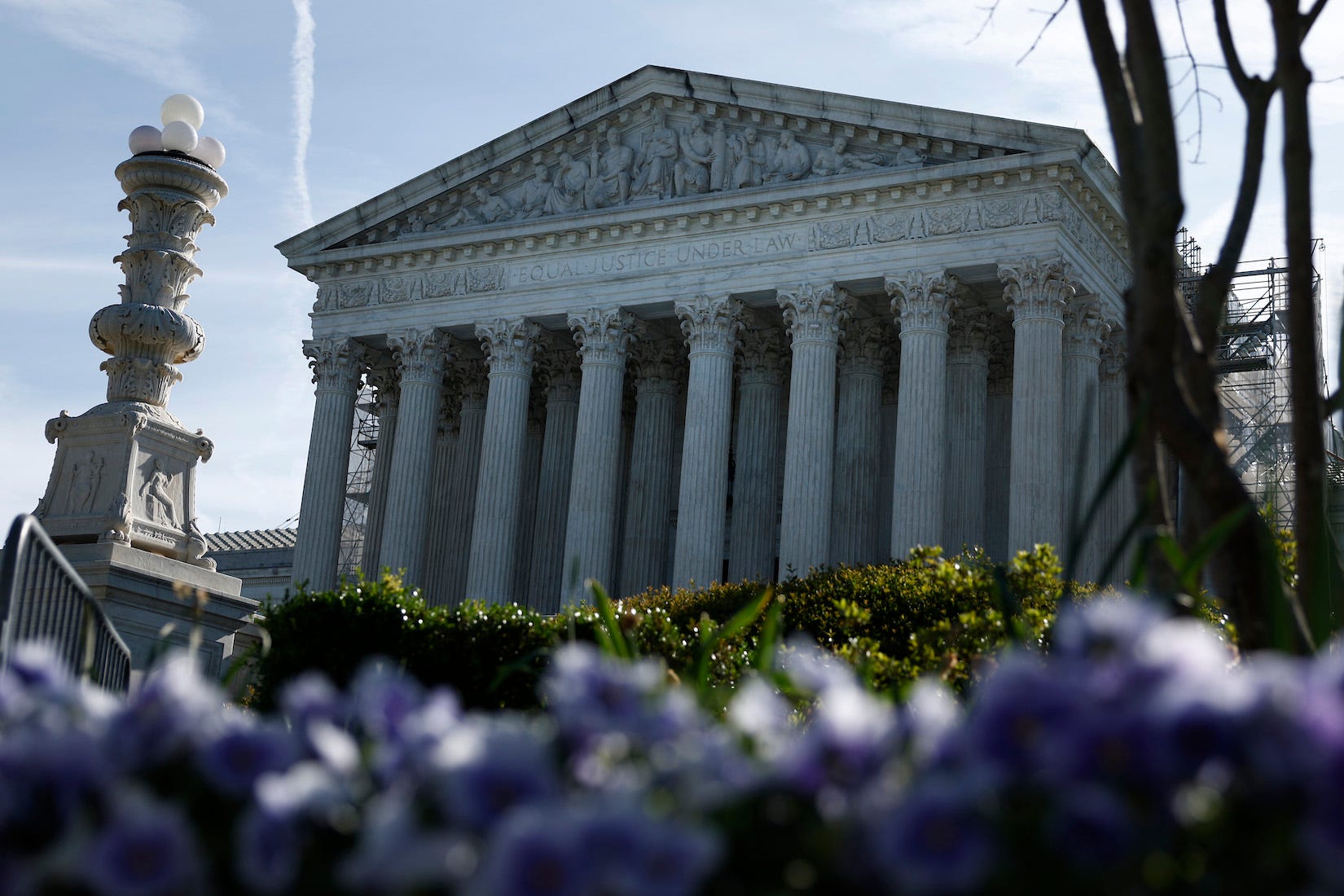
For now, the Supreme Court extended an order allowing the abortion and miscarriage care drug mifepristone to continue to be delivered by mail, blocking an intermediate appellate court’s ruling mandating in-person receipt of the prescriptions.
Justices Samuel Alito and Clarence Thomas each wrote separate dissents to the decision.
Since the Dobbs decision, mifepristone has come to be used in roughly two thirds of all abortions in the United States, and anti-abortion activists have sought to restrict access to the drug through multiple lawsuits. The Supreme Court unanimously rejected the first of these cases, FDA v. Alliance for Hippocratic Medicine, for lack of standing.
In the second action, Louisiana sued manufacturers of the drug on the legal theory that it helped residents violate the state’s strict abortion ban. The conservative Fifth Circuit Court of Appeals granted an injunction blocking access to the drug by mail nationwide, not only in the Bayou State.
Alito issued an administrative stay of the Fifth Circuit’s order last week, setting a one-week deadline for its expiration.
Although only Alito and Thomas noted their dissents, the Supreme Court does not publish the vote breakdowns on administrative decisions, also known as the shadow docket.
Thomas laid out a radical view that mifepristone’s manufacturers sought permission to “commit crimes,” citing the Comstock Act, the 150-year-old statute banning the mailing of “obscene” materials, abortion drugs, and contraceptives. Congress repealed the contraception-related provision in 1971, and most of the law remained remained dormant following Roe v. Wade. Abortion opponents sought to breathe life into “zombie law” after the Dobbs decision.
While Alito didn’t invoke that statute, he rejected GenBioPro’s argument that they were harmed by lost sales in states where their products are “generally illegal.” As is customary, the justices in the majority didn’t explain their unsigned order.
Julia Kaye, a senior staff attorney for the Reproductive Freedom Project of the American Civil Liberties Union, emphasized in her statement that the Supreme Court hasn’t issued its final ruling and mifepristone’s opponents haven’t gone anywhere.
“While it is good news that, for now, patients can continue to get this safe medication by mail and at pharmacies as they have for more than five years, we all know abortion opponents are continuing their unpopular and baseless attacks,” Kaye said in a statement.
During Biden’s presidency, the Food and Drug Administration expanded access to the drug, but the agency’s Trump 2.0-era successors have opened a review widely expected to lead to further restrictions.
“And let’s be clear about the Trump administration’s role here: when nationwide access to a critical abortion and miscarriage medication was on the line, the Trump administration refused to defend the FDA’s action and threw patients under the bus,” Kaye added.
One week ago, Kaye spoke to All Rise News in a video interview about the case on Legal AF. You can watch the conversation in full below.
Talking Feds: Redistricting, Self-Dealing and More
Former federal prosecutor Harry Litman, a longtime friend of All Rise News, invited me on his Talking Feds podcast with CNN stalwarts Alisyn Camerota and Elliot Williams.
We ran the legal news gamut with conversations about the gutting of the Voting Rights Act, the subsequent erasure of Black-majority districts across the American South, the lawsuits seeking taxpayer money for Trump and his cronies, and opposition to construction of the East Wing ballroom, the painting of the reflecting pool, and a MAGA Arc du Trump.
Listen to the full episode below.
Trump DOJ sues D.C. Bar over Jeff Clark
The Trump Justice Department is ratcheting up its attacks on bar associations with a federal lawsuit against the D.C. Bar, seeking to void its recommendation to disbar Jeffrey Clark for his role in 2020 election subversion.
In 2020, Clark was the only Trump loyalist inside the Justice Department willing to participate in a plan to gin up an investigation based on false and unsupported claims of election fraud. That conspiracy earned Clark inclusion on former special counsel Jack Smith’s list of unindicted co-conspirators and a Fulton County grand jury indicted him in connection with the now-dismissed election racketeering case.
With a new lawsuit in Washington, D.C., the Trump Justice Department is trying to unravel what remains of any accountability for Clark.
In an interview with All Rise News, legal expert Lisa Graves called the lawsuit “genuinely outrageous.”
“In my personal view, Jeffrey Clark should certainly have been disbarred,” Graves said. “But regardless of that case — or any other case — it’s inappropriate for the U.S. Department of Justice to try to impede the independence of bar associations.”
Acting Attorney General Todd Blanche hasn’t tried to hide that objective, casting his antagonism to bar associations as a counterbalance to its “blatantly partisan” operations.
Underneath the rhetoric, Blanche appears to be trying to stave off consequences for Trump Justice Department attorneys — and potentially, his own actions as Acting Attorney General. The D.C. Bar opened a separate investigation of “Stop the Steal” lawyer turned pardon attorney Ed Martin, and New York’s Attorney Grievance Committee found that Trump’s ex-campaign attorney turned disqualified U.S. Attorney John Sarcone engaged in professional misconduct.
As the Justice Department’s complaint notes, former FBI agent Michael Feinberg said on live TV that Blanche should “watch his step” in light of the disbarment of John Eastman, one of the legal architects of Trump’s campaign of election subversion. Feinberg made the comment on MSNOW after the second indictment of ex-FBI director James Comey.
Read the complaint here, and watch the interview below.
A Trumpian taxpayer slush fund?
Donald Trump’s lawsuit seeking $10 billion in taxpayer money over the Internal Revenue Service’s disclosure of his tax records appears to be heading toward a resolution — the creation of a $1.7 billion “weaponization” fund to compensate people purportedly targeted by his predecessor, ABC News reported on Thursday.
The blockbuster story reports that the Jan. 6 rioters currently suing the federal government for alleged “excessive force” by police would be among those compensated by this fund. They include those who assaulted law enforcement with chemical spray and other weapons.
As for Trump himself, always read the fine print.
“The settlement terms are expected to prohibit Trump from directly receiving payments related to those three legal claims; however, entities associated with Trump are not explicitly barred from filing additional claims, sources said.”
Look out for my conversation with Brian Tyler Cohen on this subject soon on his YouTube channel.
This is such an important issue for all professions, not only law, although law certainly bears the weight of government. It would be disastrous if the integrity of the Code of Ethics were diluted by the Department of Justice to the extent that medicine, for example, has been by market forces in our economy. Graves’s defense of legal ethics is impassioned and impeccable, and she is justified in using the adjective “immoral” to characterize the manner in which Todd Blanche and others have use the DOJ to intimidate state bar associations.
Thank you!