


Watch my video interview with the ACLU’s Cody Wofsy below.
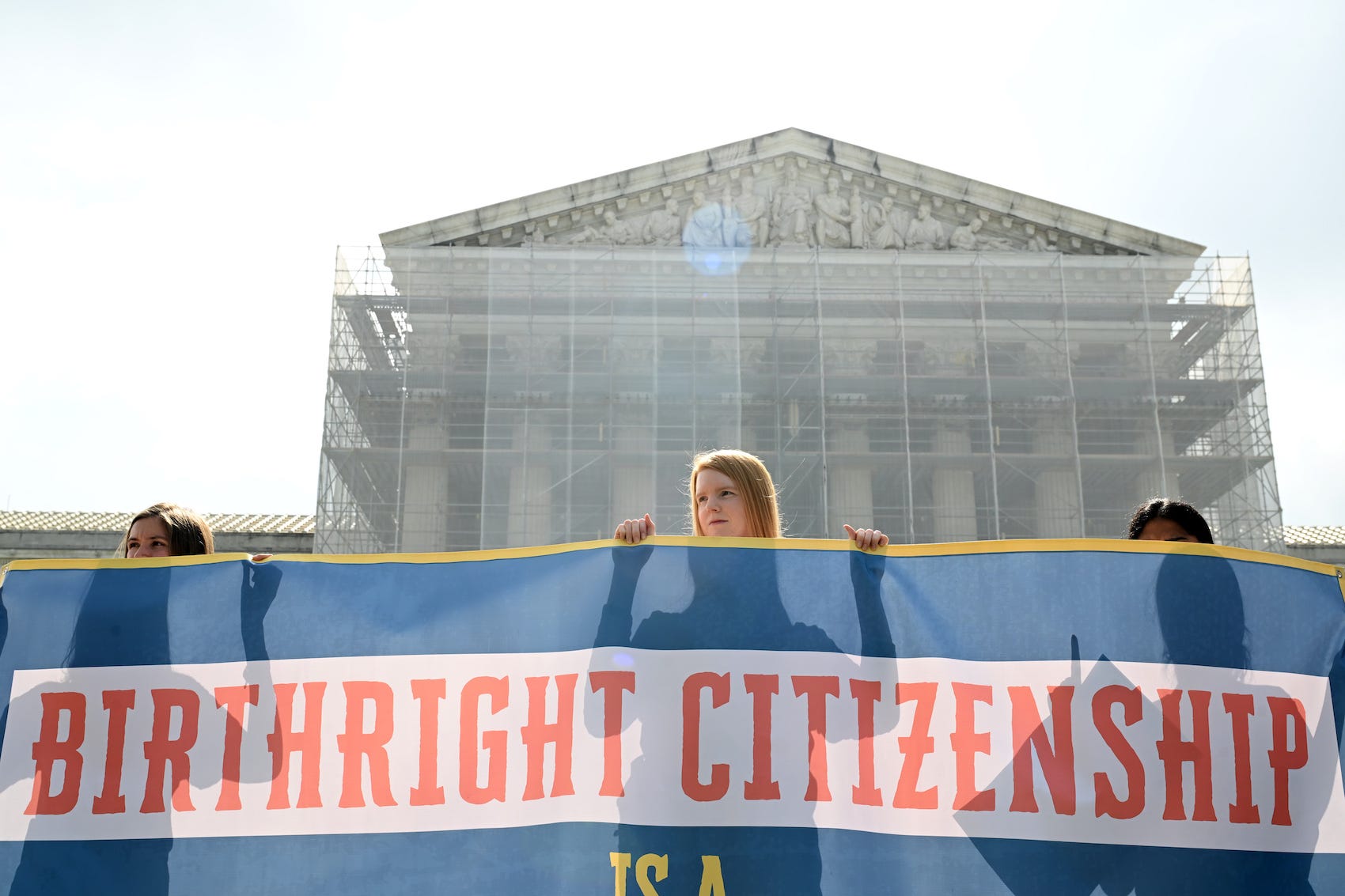
The Supreme Court agreed on Friday to hear Donald Trump’s attempt to ban birthright citizenship, a reckoning that follows every lower court telling the government that the 14th Amendment of the Constitution means what it says.
Ratified in the wake of the Civil War, the 14th Amendment begins: “All persons born or naturalized in the United States, and subject to the jurisdiction thereof, are citizens of the United States and of the state wherein they reside.”
For more than 150 years, U.S. courts accepted the line’s straightforward meaning as guaranteeing birthright citizenship, and every lower court that considered Trump’s birthright citizenship executive order has found it unconstitutional. That includes four separate district courts and two appellate courts.
The American Civil Liberties Union’s Cody Wofsy, the deputy director of the Immigrants’ Rights Project, anticipates the upcoming battle to result in a final victory over a far-right legal theory.
“We have every expectation that we are going to win this case, and that actually at the end of the day, what we’re going to see is a reinforcing of that fundamental American value and a re-enshrining of it in Supreme Court precedent, really putting this to bed once and for all,” Wofsy said.
“We want to hear the merits”
The Supreme Court’s decision to hear the government’s birthright citizenship appeal didn’t surprise or alarm the ACLU.
Earlier this year, the Supreme Court ruled on an earlier iteration of the birthright citizenship case in Trump v. CASA, restricting the ability of federal judges to issue nationwide injunctions. Some of the justices feared that ending universal relief would remove any incentive for the government to appeal narrow orders and risk a broader order from the Supreme Court.
In a footnote to her opinion, Justice Amy Coney Barrett noted that the government promised to litigate the case back up to the Supreme Court following the remand.
“The court essentially said we want to hear the merits of this as soon as possible,” Wofsy noted. “So it’s not surprising that the court took it up, and we are looking forward to making our arguments to the court and ultimately prevailing.”
The case that the Supreme Court will hear now is Trump v. Barbara, stemming from a lawsuit filed in the District of New Hampshire. “Barbara,” the pseudonym of a New Hampshire resident from Honduras, was a mother of three expecting a fourth child due in October at the time of the filing of her lawsuit. (“Barbara and baby are healthy,” Wofsy revealed.)
Barbara and her co-plaintiffs feared that Trump’s purported birthright citizenship ban would put their children’s rights in limbo.
“We got just dozens and dozens of phone calls from families who were impacted by this order from around the country telling us, ‘We’re scared. We’re confused,’” Wofsy said.
When the Supreme Court’s Trump v. CASA ruling came down, Wofsy recalled some asking him: “Do I need to move to a different state to give birth? Should I try and induce my pregnancy sooner, even though that might impact my health, in order to escape the effects of this?”
“Once and for all put that to rest”
The ACLU says that allowing Trump to enforce his purported birthright citizenship ban would inflict that uncertainty, chaos and pain on a mass scale.
“If this order were to go into effect, it would mean stripping away citizenship from tens of thousands of children and tens of thousands of more every month, every year,” Wofsy said. “As we move forward, it would mean denying people access to critical health insurance, early life nutrition, and eventually just all the rights and privileges and duties that come along with citizenship: voting, serving on juries, being a full member of American society.”
Although the 14th Amendment memorialized birthright citizenship in the United States, Wofsy notes that the tradition dates back to the nation’s origins as an inheritance from English common law. The infamous Dred Scott decision deprived enslaved Black people of the rights of citizenship during the pre-Civil War era, and the ratification of the amendment protecting that right for “all persons” served as an emphatic rebuke of that exception.
In 1898, the Supreme Court rejected the exclusion of a category of people from birthright citizenship in Wong Kim Ark, who was a child born in the United States to Chinese immigrants.
“The text of the Constitution is clear. The history is clear. The precedent is clear,” Wofsy said. “So that’s why, while none of this should be happening in the first place, we are supremely confident at the end of the day, we will prevail in this case.”
The case, Wofsy says, can “finally put to rest some of these very troubling ideas that some people should be excluded from citizenship based on the immigration status of their parents.”
“That idea has been bubbling up, especially in far-right anti-immigrant circles for decades, and the case will once and for all put that to rest and confirm that the Constitution means what it says,” he added.
Look for the full interview with the ACLU’s Cody Wofsy soon at the top of this newsletter.
That the Constitution means what it says? Like the Fourteenth Amendment’s clause excluding insurrectionists from holding office? How about the Constitution meaning what it doesn’t say? You know, like presidential immunity. How quaint to think that this Court will interpret the Constitution to mean what it says when Trump needs it to mean something else.
Looking forward to your interview. It feels like this will be a big win for the constitution. SCOTUS must come through with a solid 9-0 and Trump has to accept it.