


Learn the latest legal news with a focus on your rights.
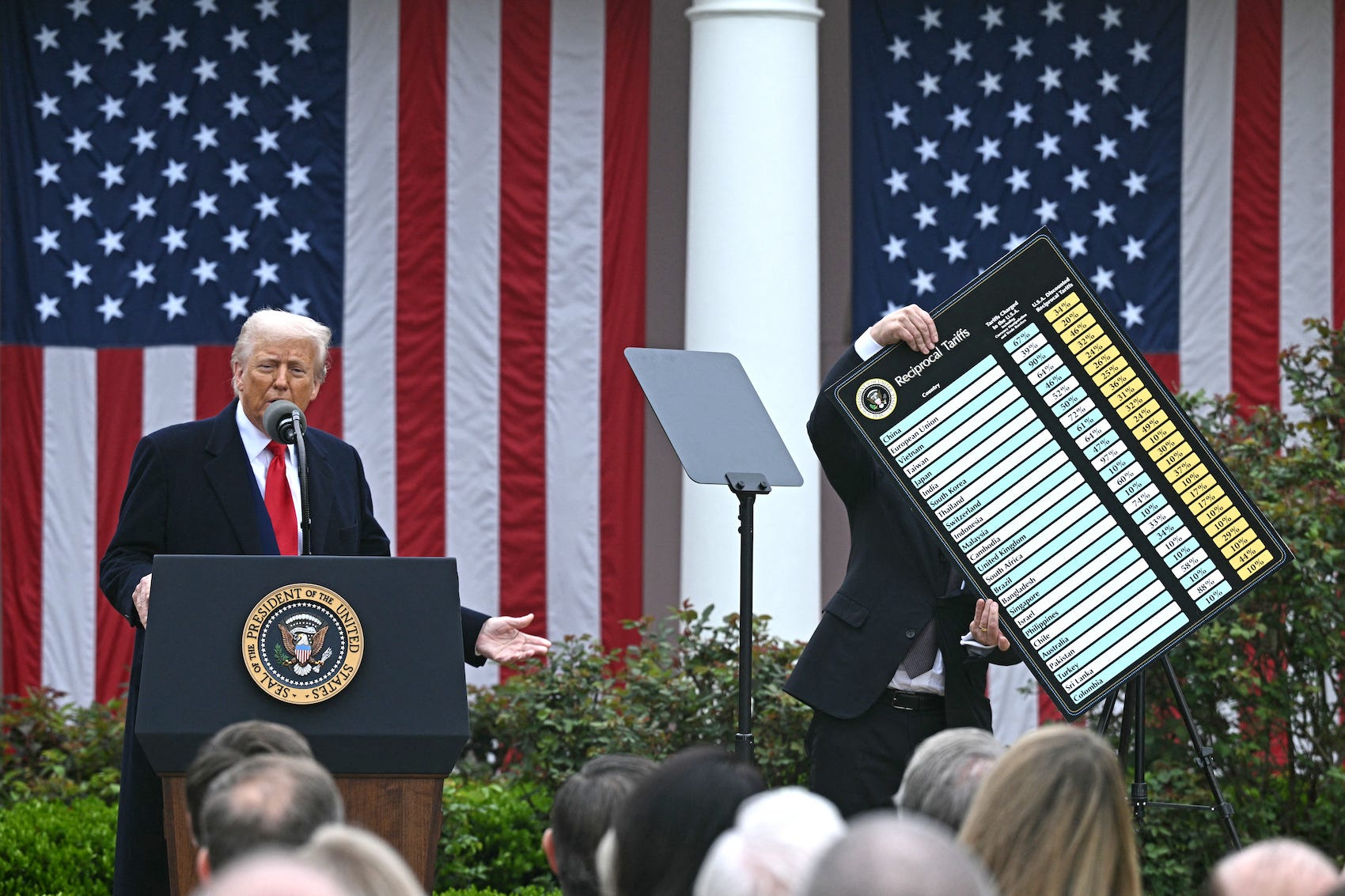
A federal trade court has told Donald Trump once again: 86 the tariffs.
On Thursday, the Court of International Trade jettisoned the latest legal rationale that Trump used to impose 10 percent tariffs globally. Trump’s justifications for his import taxes have changed, but the U.S. Constitution has not.
“The Congress shall have Power To lay and collect Taxes, Duties, Imposts and Excises,” the majority opinion notes, quoting the verbatim text of the Constitution’s Article I. “The power to tax includes the power to impose tariffs.”
Under certain laws passed by Congress, a U.S. president has limited powers to impose tariffs under specific conditions and constraints, but every court that has considered Trump’s tariff proclamations has found that he tore through those checks. First, Trump became the first U.S. president in history to try to cite the International Emergency Economic Powers Act (IEEPA) to unilaterally impose his import taxes, a maneuver that every court blocked as illegal.
Trump premised his 10 percent global tariffs on the Trade Act of 1974’s so-called “Balance-of-Payments authority,” using the phrase interchangeably with a trade deficit.
The trade court’s majority found clearly: The phrases aren’t synonymous.
“Proclamation No. 11012 is invalid, and the tariffs imposed on Plaintiffs are unauthorized by law,” the majority opinion states.
When the Supreme Court blocked Trump’s so-called “Liberation Day” tariffs in February, Justice Brett Kavanaugh practically invited Trump to work around the majority’s decision under different statutory schemes.
“Although I firmly disagree with the Court’s holding today, the decision might not substantially constrain a President’s ability to order tariffs going forward,” Kavanaugh wrote in his dissent. “That is because numerous other federal statutes authorize the President to impose tariffs and might justify most (if not all) of the tariffs at issue in this case—albeit perhaps with a few additional procedural steps that IEEPA, as an emergency statute, does not require.”
But Chief Justice John Roberts swatted that claim away in a footnote of the majority opinion.
“The cited statutes contain various combinations of procedural prerequisites, required agency determinations, and limits on the duration, amount, and scope of the tariffs they authorize,” Roberts wrote at the time.
That line suggests that Kavanaugh will likely remain outvoted through another round of appeals.
New York Attorney General Letitia James, who was part of a 12-state coalition fighting the Trade Act tariffs, said that rebranding tariffs doesn’t legitimize them.
“Once again, the courts have made clear that the president cannot unilaterally rewrite our trade laws to suit his political agenda,” James wrote in a statement. “Limitless tariffs were unlawful the first time, and changing the label did not make them any less illegal the second time.”
Of the plaintiffs that filed the lawsuit, only the state of Washington and two of the importers proved that they imported goods subject to the Trade Act tariffs. Therefore, the majority found that they have standing for an injunction and will be eligible for refunds.
Trump almost certainly won’t accept defeat gently, and another round of appeals are likely imminent.
The Trump Justice Department didn’t respond to a press inquiry.
Earlier on Thursday, Trump threatened to unilaterally impose another 25 percent tariff on the European Union in a post seeking to strongarm its president Ursula von der Leyen into implementing a trade deal. Another legal defeat falling on the same day as that ultimatum shows the limits of Trump’s power, and the writing may be on the wall for his strained justifications for avoiding Congress’s power of the purse.
Look out for my conversation on this topic soon with Brian Tyler Cohen.
Protesters tell Tennessee GOP: “No Jim Crow”
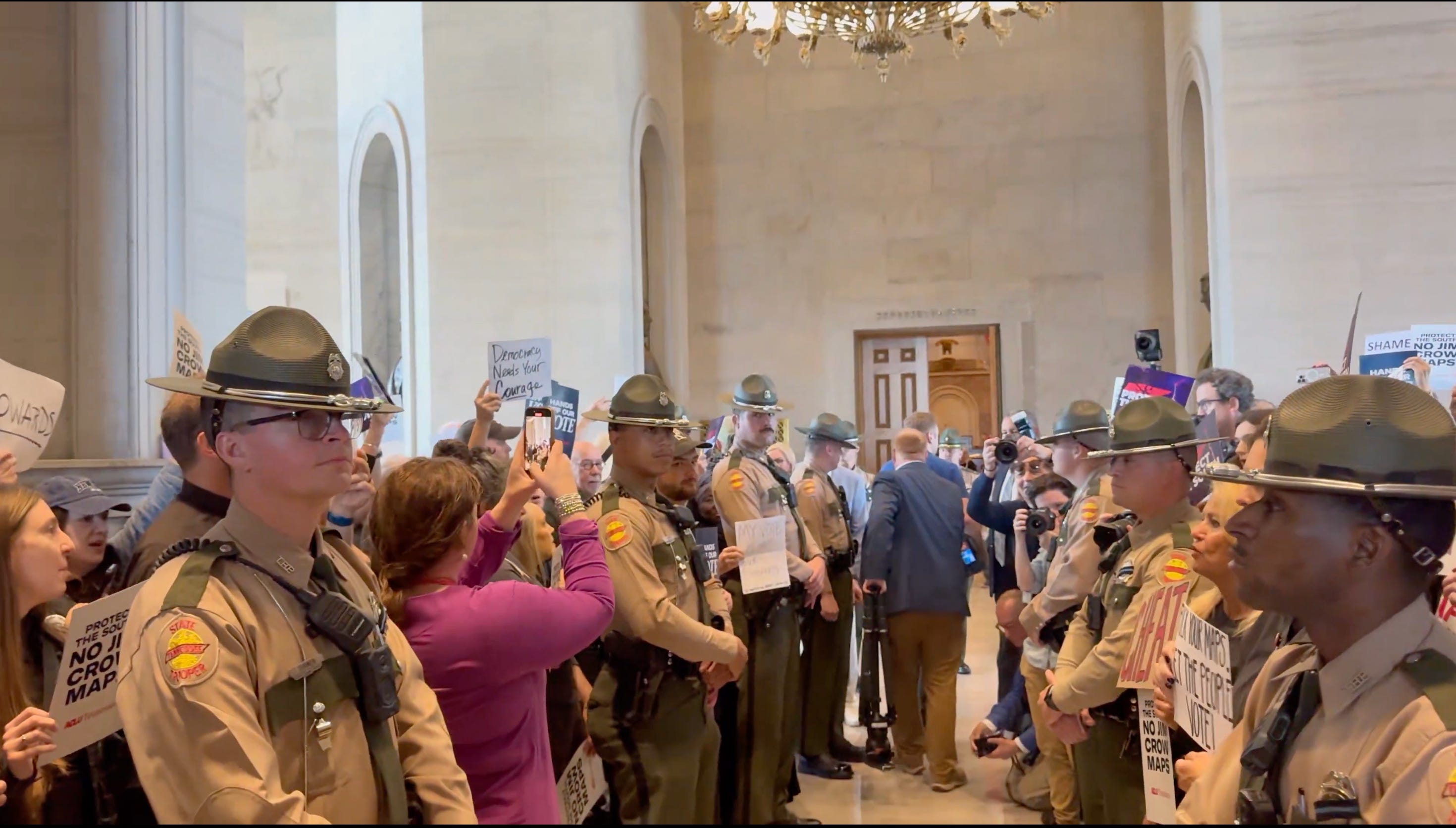
As Tennessee Republicans passed a bill to paint the state’s last Black congressional district red, protesters descended upon the Capitol shouting: “No Jim Crow!”
It’s the latest fallout in the aftermath of the Roberts Court’s gutting of the vestiges of the Voting Rights Act in Louisiana v. Callais, which set off a race throughout the American South of redrawing maps that previously included what were known as “opportunity districts.”
A ruby red state, Tennessee had eight Republican districts and a historically Black district that traditionally voted Democratic. The map passed by the GOP-dominated state legislature carved up Memphis, over the objections and howls of protesters.
Read more on the development here.
Reversing DOGE’s $100M+ humanities demolition
A federal judge in Manhattan has ordered the restoration of more than $100 million in National Endowment for the Humanities grants, finding that the DOGE demolition crew engaged in “textbook” discrimination.
“This case presents a textbook example of unconstitutional viewpoint discrimination,” Senior U.S. District Judge Colleen McMahon, the former chief of the Southern District of New York, wrote in a 143-page opinion.
That viewpoint is so-called “DEI,” short for “diversity, equity and inclusion” and defined in the ruling as the belief that the “exclusion of historically disadvantaged groups is undesirable.’”
“The record establishes that the termination decisions were driven by an expressly ideological method of classification,” McMahon wrote. “There can be no genuine dispute about this point. Indeed, the Government has all but admitted as much.”
The ruling reveals the DOGE crew’s jaw-dropping methodology: ChatGPT.
“Some of these AI outputs identify subject matter that, in a broad sense, could be associated with themes commonly discussed under the rubric of ‘DEI’ – which is to say, subject matter expressing the view that ‘the exclusion of historically disadvantaged groups is undesirable,’” the ruling states. “Others plainly do not. In either case, the classification — and the resulting termination decision — turned on DOGE’s perception that the grantee was expressing a DEI-related viewpoint, not on any neutral, statutorily grounded criterion.”
One of the grants flagged as DEI was an anthology titled “In the Shadow of the Holocaust: Short Fiction by Jewish Writers from the Soviet Union.”
“Revoking a federal grant solely because it discusses and illuminates historical injustice against a minority group is plainly viewpoint discrimination. But, according to the Government, the project was “#DEI” because it ‘explores Jewish writers’ and ‘highlight[s] themes of witnessing, memory, and resilience.’”
The Trump administration’s crusade against pro-diversity viewpoints has landed them in legal hot water before.
In June, a different federal judge found that Robert F. Kennedy Jr.’s slashing of health grants in the name of fighting DEI led to the worst racial discrimination he had seen in his four-decade career.
Read the ruling here.
SPLC pleads not guilty as trial date is set
The Southern Poverty Law Center pleaded not guilty to all wire fraud and other charges leveled by the Trump Justice Department, as a federal judge set a trial date later this year for Oct. 5.
The civil rights group’s interim president and CEO Bryan Fair released a statement following the hearing calling the charges “provably wrong.”
“Our informant program was successful in accomplishing its purposes: Threats and attacks were prevented, criminal activity was stopped, and information was gathered to dismantle the efforts of hate and extremist groups,” Fair said. “There is no question that the information the SPLC shared with law enforcement saved lives.”
As previously reported on All Rise News, Acting Attorney General Todd Blanche already appears to be backpedaling on some of his allegations.
I explain how and why in this video breakdown.
Every bit of legal pushback helps. Strangely, the law has kept me sane this year because the people violating and abusing the law are so venal and pathetic and mean. Thanks for your tireless reports, Adam.
Why is gerrymandering to increase white voters in a district not considered racial gerrymandering? What am I missing?