


Watch my conversation with Allison Gill on this topic in the video at the top of this newsletter, and read more context about the decision below.
For a second time, a divided D.C. Circuit blocked a federal judge from pursuing possible criminal contempt findings over the Trump administration’s March 2025 deportation flights to El Salvador.
U.S. Circuit Court Judges Neomi Rao and Justin Walker, who were both appointed by Donald Trump, granted a writ of mandamus blocking any contempt inquiry. Their Biden-appointed colleague Judge J. Michelle Childs dissented, warning of the consequences of the decision.
“Contempt of court is a public offense, and the fate of our democratic republic will depend on whether we treat it as such,” her dissent began. “In the many forms in which it can be committed, contempt degrades the power that the People, through their Constitution and Congress, gave the federal courts. Without the contempt power, the rule of law is an illusion, a theory that stands upon shifting sands. For contempt offends not only the authority of whichever judge has been subjected to such incursions, but it also offends our system of governance. Addressing contempt is, therefore, a responsibility that is part and parcel of the court’s duty to interpret and apply the laws of the governed.”
A tangled, yearlong road
A little more than a year ago, Trump invoked the Alien Enemies Act declaring that the Venezuelan gang Tren de Aragua amounted to an invasion, using the designation to load more than 200 men onto deportation flights in late March. Most had no criminal records, a CBS investigation confirmed.
Chief U.S. District Judge James (“Jeb”) Boasberg quickly called for a hearing, ordering the government to either turn the flights around or bar the men’s transfer to Salvadoran custody. Boasberg later issued a written order blocking the government from removing the men from the United States. The government claimed to interpret the written order as walking back Boasberg’s ruling from the bench.
The Trump administration then transferred the original deportation flights to El Salvador, leading Boasberg to pursue criminal contempt inquiries for roughly a year.
In the first round, Boasberg found probable cause to believe that the government engaged in criminal contempt, initiating a process to discover who violated his order and whether to refer the matter for prosecution.
The legal landscape changed on the long road to appeal.
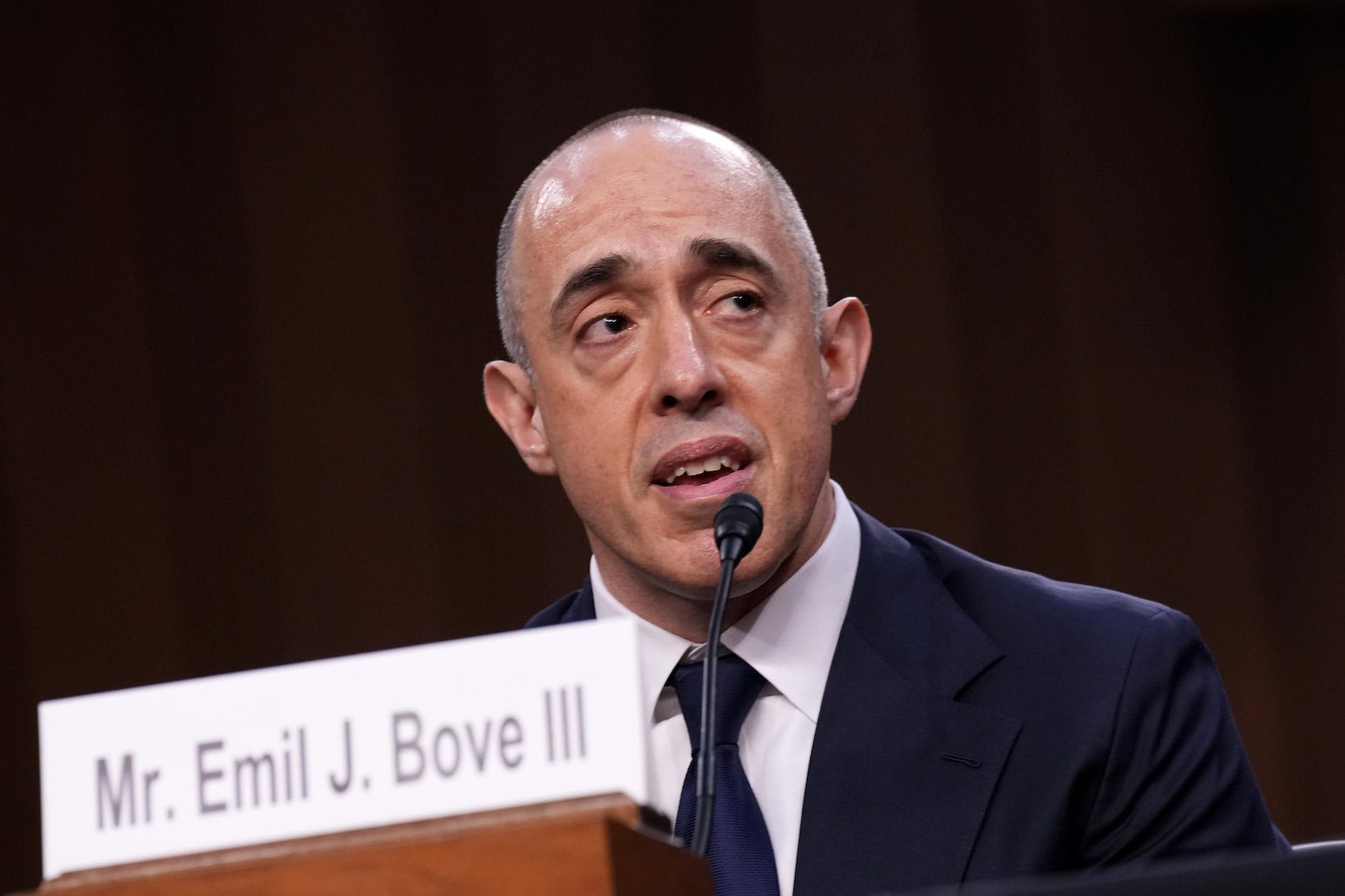
Former Justice Department employee turned whistleblower Erez Reuveni told Congress that then-senior DOJ official Emil Bove instructed government lawyers to be prepared to tell judges “f—- you.” That didn’t stop Senate Republicans from confirming Bove, one of Trump’s former criminal defense attorneys, to a lifetime seat on the Third Circuit Court of Appeals.
In August, a divided D.C. Circuit panel vacated Boasberg’s probable cause finding: Two Trump appointees, Judges Rao and Gregory Katsas, voted in the majority, and Judge Cornelia Pillard (Obama) dissented. Reviewing the decision en banc, the D.C. Circuit’s full bench declined to reinstate Boasberg’s probable cause finding, but the majority found that the contempt proceedings could move forward because Rao and Katsa couldn’t agree on whether to dismiss it.
Once the case returned to his courtroom, Boasberg scheduled a hearing that would feature testimony from Reuveni and Justice Department attorney Drew Ensign. Such a hearing would have turned up the pressure on government officials and Bove, a now-sitting judge.
In the wake of the second D.C. Circuit ruling, that reckoning has been postponed indefinitely, but it could reemerge later.
‘A blow to the rule of law’
The American Civil Liberties Union’s attorney Lee Gelernt, representing the deported immigrants, vowed to seek another en banc review before the D.C. Circuit’s bench.
“The opinion is a blow to the rule of law,“ Gelernt told All Rise News. “Our system is built on the executive branch, including the president, respecting court orders. In this case there is no longer any question that the Trump administration willfully violated the court’s order.”
Trump’s Justice Department has vilified Boasberg for pursuing the contempt proceedings, filing a failed disciplinary complaint against him and trying to gin up support for his impeachment on Capitol Hill.
Now, two D.C. Circuit panels — dominated by Trump appointees — have given him an extraordinary kind of rebuke, overturning his decision through a rarely granted legal maneuver known as a writ of mandamus. Now-Acting Attorney General Todd Blanche wasted no time in using that development to attack Boasberg by name once again.
“Today’s decision by the DC Circuit should finally end Judge Boasberg’s year-long campaign against the hardworking Department attorneys doing their jobs fighting illegal immigration,” Blanche wrote on X.
Even in overruling Boasberg, Judge Walker went out of his way to praise his reputation and express sympathy for his situation.
“I do not envy the position of any judge facing such time pressure to make hard and high-stakes legal decisions,” Walker wrote. “Fortunately, the trial judge assigned to this case had more than two decades of judicial experience, with a widely respected record of dispassionate decisionmaking.”
Rao and Walker accepted the Justice Department’s position that the government didn’t defy Boasberg’s ruling because of its interpretation of his written order.
Childs warned about the precedent that sets.
“Now, any litigant can argue, based on their preferred interpretation of a court’s order, that they did not commit contempt before contempt findings are even made,” she wrote.
Read the opinions and dissents here.